Voepass Flight 2283 Final Report Reveals Chain of Safety Failures Behind Fatal Crash
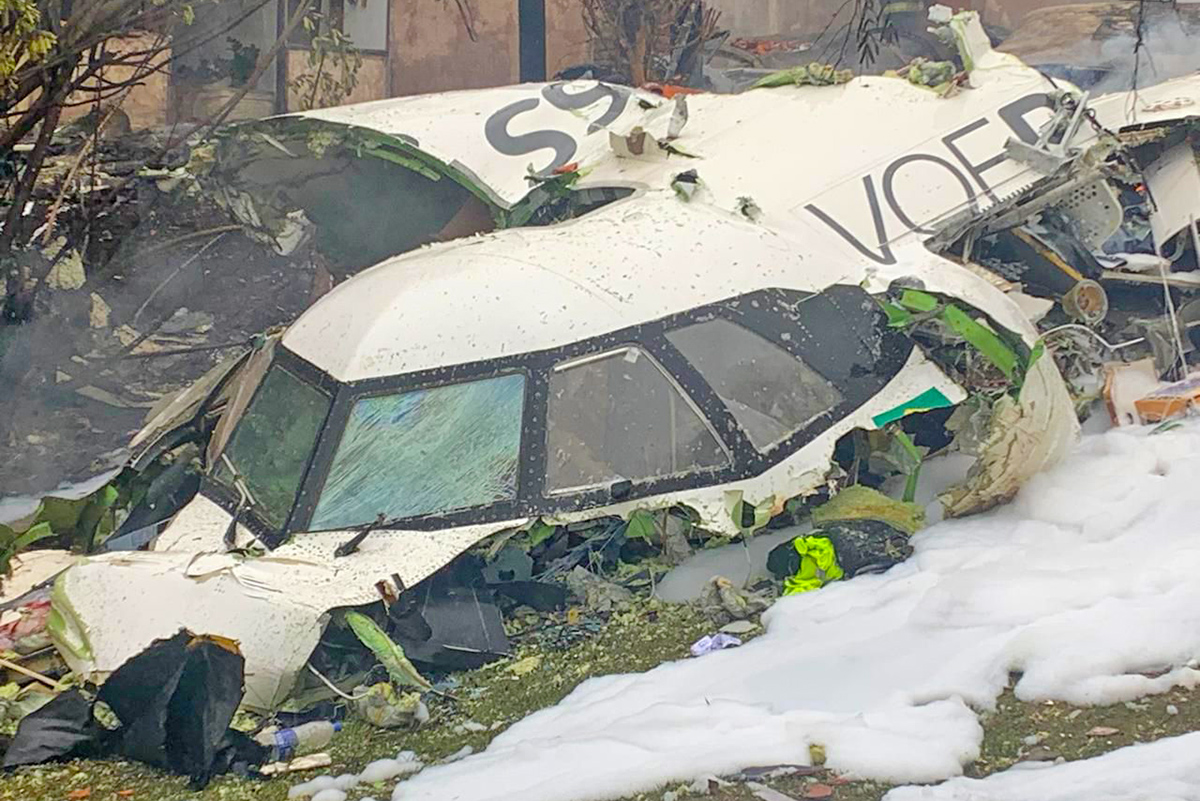
Photo Source: Aeroin
The final report on Voepass flight 2283 was published this Thursday, July 23, 2026, bringing more details of the tragedy involving the ATR 72-500 in Vinhedo, São Paulo, Brazil, which resulted in the death of 62 people.
The investigation, which lasted almost two years, was conducted by the Center for Investigation and Prevention of Aeronautical Accidents (CENIPA) and included collaboration from the manufacturer ATR, as well as French investigators from the BEA and Canadian investigators from TC, who were responsible for the type certification of the aircraft and its engines, respectively.
An analysis of the organizational culture pointed to a series of failures at Voepass, mainly related to the safety culture, which contributed to pilots ignoring the aircraft's alerts, not only on flight 2283 but also in other occurrences in 2024 and in previous years.
This information shows that the airline had mediocre management, which was already known in the aeronautical environment, and was reflected in cost-cutting at the expense of safety, such as cannibalization (taking parts from one aircraft so that another can fly) and even labor issues, such as non-payment of severance pay and non-deposit of FGTS, in addition to default with suppliers and non-payment of air navigation fees, which had already been reported here on AEROIN on several occasions before the accident.
On the previous flight, on the route from São Paulo (Guarulhos) to Cascavel, already with the same flight crew of the flight 2283 accident, the aircraft stayed 6 knots below the minimum speed for flight in icing conditions, reaching 161 knots, and the crew descended from flight level 160 to 140, reducing 2,000 feet (610 m) of altitude. There were also 16 alerts, both for the failure of the control column vibration system when the aircraft approaches a stall and for the system that automatically commands the control column down to exit this situation, known respectively as stick shaker and stick pusher.
It was also noted that, on previous flights of the same aircraft, PS-VPB, with different crews, failures were recurrent, and Voepass's culture was to ignore these warning messages, restart systems beyond what is recommended by the ATR manual and the airline itself, and not execute checklists. CENIPA also reported that the low-speed alert was commonly ignored by ATR pilots not only at Voepass, which theoretically would include Azul and Total Linhas Aéreas, other operators of the aircraft in Brazil.
CENIPA reported that, on a date prior and distinct from the accident, an in-flight loss of control occurred that was not reported by Voepass to ANAC and CENIPA.
Another point raised was that, during overnight stops outside Voepass's main bases (notably Guarulhos and Ribeirão Preto), the aircraft were released under the MEL condition, which is a minimum equipment list prepared by the company based on the manufacturer's list (MMEL), in which the aircraft can perform a flight with some defective or missing component, provided that certain operational restrictions provided for a period also determined in the list are met.
On flight 2283, a total of 10 MEL items were active, that is, with some type of inoperability. One of these items was the windshield wiper, which, according to the MEL, was a No-Go item, meaning the plane could not take off with it, but Voepass employees ignored this.
Maintenance tasks were sometimes performed by improperly authorized personnel and with the replacement of defective parts by parts from other aircraft (cannibalization), even if these also had reported faults.
During the flight, the Final Report confirmed the information anticipated exclusively by Folha de São Paulo, AEROIN's media partner, which points out that the pilots remained, for a significant part of the flight, engaged in informal conversations unrelated to the operation of the aircraft.
It was also reported in the Final Report that, during flight 2283, several icing alerts appeared that preceded the performance degradation alerts, which precede the stall alert, and that the pilots took no action, merely turning on the anti-icing/de-icing systems and proceeding with the operation as if the flight were normal, which had also been anticipated in the previous report.
CENIPA points out that the high workload, coupled with Voepass's culture, caused "inattentional blindness and deafness" and inadequate information management due to excessive activity in a complex environment and habits outside prescribed procedures.
The stick shaker and stick pusher systems were activated, including an aural warning, and the autopilot was disengaged shortly thereafter. The aircraft, now in manual flight, did not maintain stabilized flight, performing a left turn and increasing the nose attitude, entering a stall condition.
This roll began to be reversed, but CENIPA reported that, in an act of "startle" by the pilots after the aircraft entered a stall, the aviators pulled the control column and the ATR's angle of attack increased, reaching 15.3º, in a possible attempt to correct the plane's attitude, including actuation of the rudder pedal so that the rudder could help the aircraft exit that situation.
After the aircraft reversed the roll, the pilots now commanded the control column fully to the left, but kept the rudder pedal commanding the plane to the right, in so-called crossed controls. In this situation, the aircraft's crash occurred after a stall of the horizontal stabilizer and elevator, and, given that the plane was at a 60º angle of attack, it would no longer be possible to recover the aircraft to straight and level flight, with the crash being inevitable, as the ATR 72 entered a flat spin.
A divergence in the angle of attack sensors (possibly caused by severe icing flight conditions) of more than 4º in an interval of less than 5 seconds caused the temporary deactivation of the stick shaker and stick pusher systems. CENIPA pointed out that there were 13 seconds between the low-speed warning and the actual stall of the aircraft.
Contributing Factors
-
Training and Qualification – Undetermined. Although the crew members had undergone the training required by regulatory requirements relating to operation in conditions conducive to severe icing and recovery from abnormal attitudes (UPRT), the actions observed during the accident flight did not prove consistent with the minimum desired level of proficiency. There was no timely recognition of the severity of the condition faced and no adequate response to recurrent alerts. Likewise, action on the flight controls occurred divergently from that recommended in training.
-
External Influences – Undetermined The personal problems faced by the PIC at the time of the occurrence, which were the subject of informal conversations between him and the SIC during the flight, may have diverted his attentional focus from operation-related stimuli and reduced his perception of risk, given that the dialogues occurred even at critical moments of the operation, such as during or immediately after the emergence of performance degradation warnings/alerts.
-
Design – Undetermined. The INCREASE SPEED alert was activated in a situation that required immediate corrective action by the flight crew, in which the aircraft's indicated speed was close to VmLB0icing, being, therefore, consistent with the criteria defined by the manufacturer itself for a level 3 warning message (WARNING). The fact that the INCREASE SPEED alert was categorized as level 2 (CAUTION) by the manufacturer may have induced crews to underestimate the severity of the condition to be managed.
-
Application of Controls – Contributed: The pilots' action on the pitch control, pulling back when the Stall Warning was activated, in disagreement with the procedures recommended in the QRH and UPRT training, contributed to the increase in AOA and the aggravation of the stall condition.
-
Attention – Contributed: Engagement in informal conversations unrelated to the technical and operational handling of the aircraft reduced the flight crew's attentional focus both on monitoring the external environment, characterized by conditions conducive to severe icing, and on observing the indications and alerts activated in the cockpit. This state of distraction favored the emergence of inattentional blindness and inattentional deafness.
-
Attitude – Contributed Despite prior awareness of the failure in the Airframe De-Icing system and the forecast of conditions conducive to severe icing along the route, there was a decision to proceed with the flight as planned, without adopting mitigatory measures aimed at reducing the risk inherent in operating in those atmospheric conditions. This conduct evidenced an attitude characterized by disregard for operational aspects and applicable procedures, contributing to the operation of PS-VPB below acceptable minimum safety levels. Failure to execute the operational procedures provided for in the QRH throughout the flight, such as the DE ICING AIRFRAME FAULT procedure, still during the climb to cruise level, as well as those related to the warnings/alerts of the APM system (CRUISE SPEED LOW, DEGRADED PERFORMANCE, and INCREASE SPEED), reflected an inappropriate posture, suggesting tacit acceptance of deviations from established operational standards.
-
Adverse Weather Conditions – Contributed Weather conditions contributed to the configuration of the occurrence scenario, creating an unfavorable environment for the safe operation of the aircraft. Prolonged exposure to severe icing conditions (SEV ICE) resulted in a significant increase in aerodynamic drag and performance compromise, with a direct impact on cruise speed and the ability to maintain the desired flight regime.
-
Cockpit Coordination – Contributed to the accident. Inadequate management of tasks assigned to each crew member, communication failure, and disregard for operational rules characterized inefficiency in cockpit coordination, in which threat management was not jointly mitigated, which favored conducting the flight in an environment of growing risk, even in the face of successive alerts of aircraft performance degradation issued by the APM, contributing to the accident.
-
Work Group Culture – Contributed: The frequent appearance of warnings and alerts, especially those related to the APM system, generated complacency in the company's pilot group, culminating in reduced vigilance and relaxation in the face of high repetitiveness. In this context, the company's pilot group tended to underestimate the APM system's alerts/warnings, supported by a false sense of security justified by previous experience, in which there were no consequences associated with such actions.
-
Organizational Culture – Contributed: Informality predominated in the company's interactions among members, permeating different hierarchical levels and sectors. According to reports, while this proximity and informality generated a friendly climate, they also made room for improvisation and permissiveness, leading to the flexibilization of rules and the degradation of the flight safety culture. Thus, the collective perceptions of the company's members reflected flawed core values and low adherence to flight safety principles. The existence of informally institutionalized rules weakened the safety culture, leading to PS-VPB operating below acceptable minimum safety levels.
-
Piloting Judgment – Contributed. At no point during the flight did the pilots request an immediate descent or declare an emergency due to ice accumulation and performance loss. This omission, associated with the failure to execute the actions provided for in operational procedures in the face of performance degradation warnings/alerts issued by the aircraft, indicated that the flight crew made an inadequate assessment of parameters related to the safe operation of the aircraft, which resulted in the absence of the actions necessary to manage the conditions faced. Furthermore, the acceptance to perform the flight in known icing conditions in an aircraft that was knowingly operating with the Airframe De-Icing system inoperative, as well as the failure to execute the procedures provided for the activation of the various APM warnings, revealed an inadequate assessment of parameters related to aircraft operation, despite the qualification of the crew members to operate it.
-
Aircraft Maintenance – Contributed The absence of a formal entry in the TLB, after the emergence of in-flight failures, especially regarding the malfunction of the Airframe De-Icing system in the flights leading up to the accident, prevented the company's technical and operational sectors from applying mitigating measures, such as dispatch under MEL, aircraft change, route replanning, or even corrective maintenance to resolve the defect, contributing to PS-VPB flying in weather conditions conducive to icing with the Airframe De-Icing system inoperative.
-
Perception – Contributed Impairments were identified in the flight crew's ability to recognize, comprehend, and project sensations originating from internal and external stimuli to the operation environment, such as severe icing weather information, performance loss indications, and APM warnings/alerts, which led to a reduction in situational awareness and late perception of the risk to which they were exposed, thereby impairing the emission of responses compatible with the severity of the situation.
-
Flight Planning – Contributed: Planning did not consider all restrictive conditions for the flight of PS-VPB on the intended route, allowing operation below acceptable minimum safety levels. This gap contributed to maintaining the aircraft at a flight level susceptible to ice accumulation, culminating in progressive performance degradation and the construction of the occurrence scenario.
-
Decision-Making Process – Contributed: The decision to perform the cruise flight at FL170, a level where severe icing was forecast, evidenced difficulties in the flight crew's analysis and choice of alternatives. Such difficulties may have originated from biases stemming from an organizational culture that made room for improvisation and permissiveness, leading to the flexibilization of rules and the degradation of the flight safety culture.
-
Organizational Processes – Contributed: The underutilization of information provided by PAADV, especially that related to performance degradation due to ice accumulation, and the absence of real-time weather-condition advice from the CCO to pilots demonstrated that organizational processes were not consolidated as effective risk-mitigation instruments. This set of weaknesses favored passive conduct in the face of alerts and inhibited structured actions provided for in operational procedures.
-
Managerial Supervision – Contributed: The absence of effective managerial supervision over informal practices adopted in both flight and aircraft maintenance operations created loopholes that allowed deviations to become normalized, to the point where aircraft alerts were disregarded, diminishing the perception of risk in that operational context. As a result, more robust preventive measures ceased to be adopted, allowing operations with levels below acceptable minimum safety levels.
-
ANAC's Actions – Contributed Audits and inspections carried out by ANAC on the operator prior to the accident revealed various technical and procedural non-conformities related to aircraft maintenance, component traceability, non-compliance with MEL conditions, and the recurrent practice of informal reporting of faults or non-reporting. The findings of the SIPAER Investigation Commission indicated that the signals identifying hazards, degradation of technical conditions, and latent conditions prior to the accident were not capable, when analyzed within the scope of ANAC's risk management process, of assisting in the strategic decision-making necessary to mitigate and control the risks in the operational environment regulated and supervised by it. Thus, it can be concluded that the means of recording, processing, and monitoring data and information regarding hazards, with the purpose of managing risks, were still in a maturing phase, allowing the continuation of the company's operations despite the degradation of safety levels.
The 266-page Final Report is available at this link.