Preliminary Report Sheds Light on Deadly Runway Collision at LaGuardia
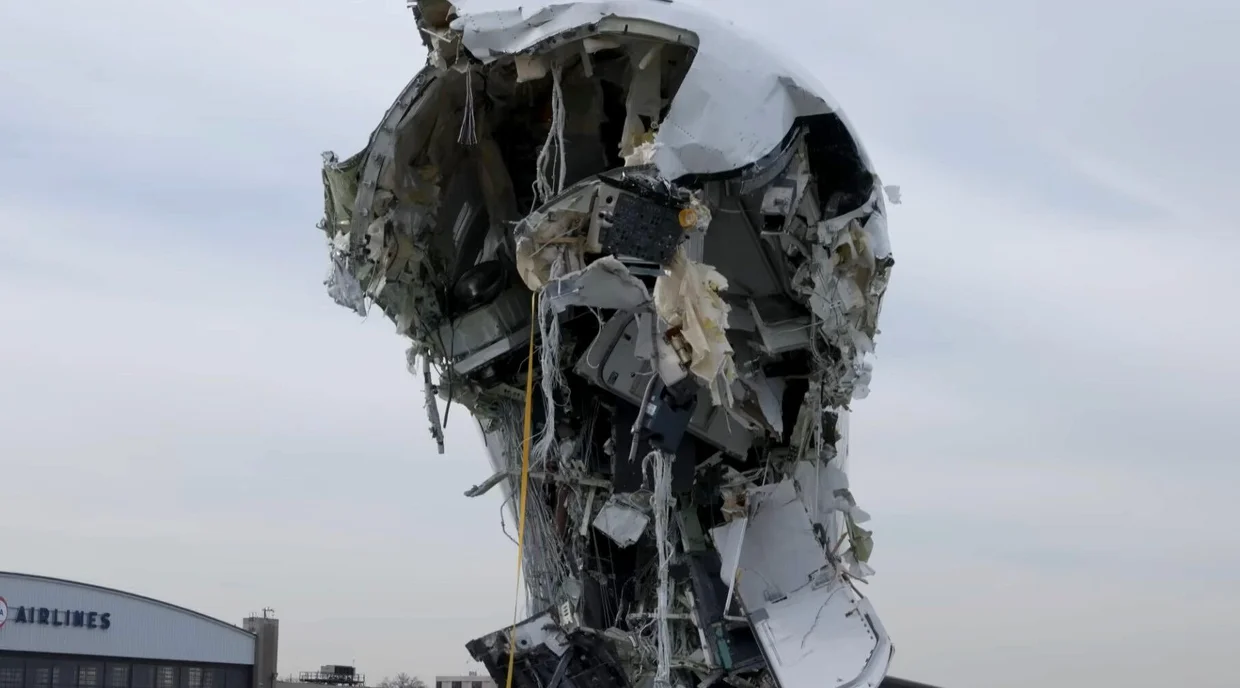
An image released by the National Transportation Safety Board reveals the severe damage to the Air Canada aircraft, with the nose section completely torn off. Photo Source: NTSB
The National Transportation Safety Board (NTSB) has released its preliminary findings into the fatal runway collision at LaGuardia Airport, offering new insight into the chain of events that led to an Air Canada jet striking a firefighting vehicle late at night.
Accident Overview

Air Canada flight AC8646 from Montréal to New York - LaGuardia Airport
On March 22, 2026, at 11:37 p.m. EDT, Jazz Aviation LP flight JZA646—operating as Air Canada flight AC8646—was involved in a catastrophic runway collision at LaGuardia Airport.
The aircraft, a Bombardier CRJ900 (CL-600-2D24) registered as C-GNJZ, struck Rescue 35, an Oshkosh Striker 1500 aircraft rescue and firefighting (ARFF) vehicle, while landing on Runway 4. The airplane sustained substantial damage.
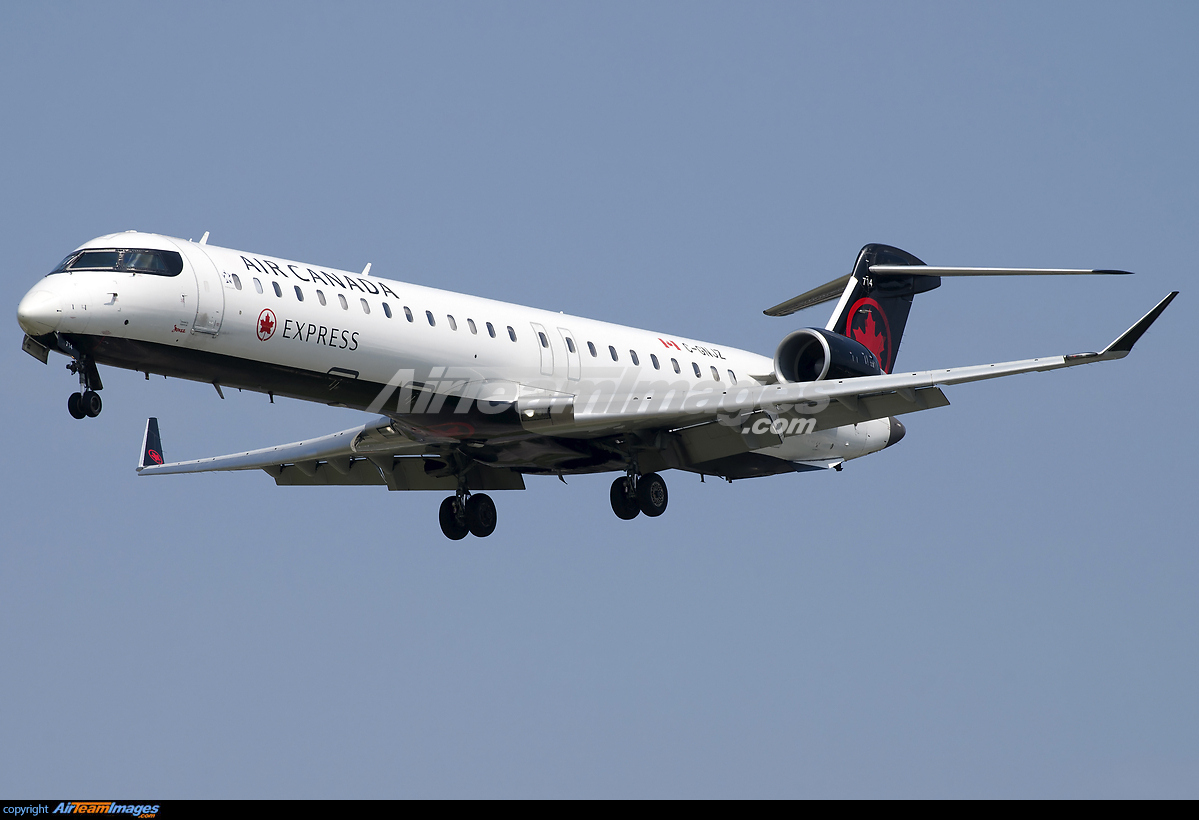
Bombardier CRJ900 (C-GNJZ) - Photographer: Mehrad Watson - AirTeamImages.com
The captain and first officer—Antoine Forest and Mackenzie Gunther—were fatally injured. Among the 2 flight attendants, 72 passengers, and 2 ARFF crew members on board the respective vehicles, 39 people were transported to local hospitals, including 6 with serious injuries. The flight was operating under Part 129 regulations from Montréal–Trudeau International Airport to LaGuardia at the time of the accident.

View of both vehicles after the collision. Photo Source: NTSB
The accident claimed the lives of two pilots—Antoine Forest and Mackenzie Gunther—and left dozens of others injured, raising urgent questions about runway safety, communication protocols, and airport ground operations.

JZA646, the accident aircraft, is highlighted within the red circle, while the ground vehicle targets are indicated in the cyan circle. (Source: FAA via NTSB)
A Rapidly Unfolding Timeline
According to the NTSB’s report, the sequence of events unfolded in under two minutes, highlighting just how little time was available for corrective action.
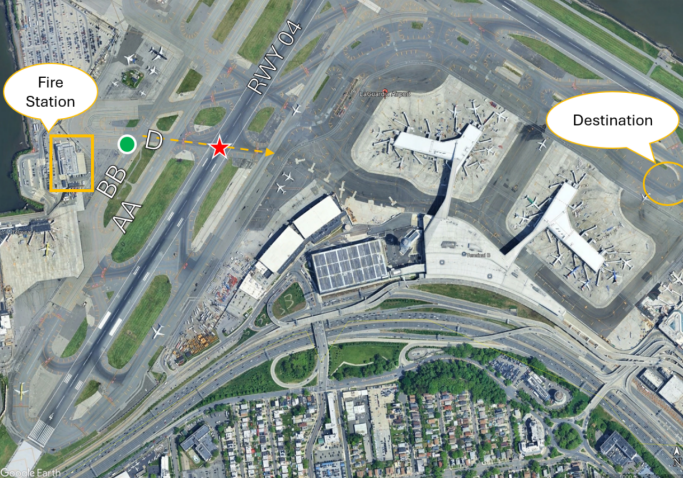
Google Earth image of the accident site showing key positions: the green circle marks where ground vehicles initially assembled, the yellow dashed line outlines their planned route along Taxiway D, and the red star pinpoints the location of the collision. Photo Source: NTSB
- 11:35:07 p.m. — Air traffic control clears the Air Canada flight to land on Runway 4
- 11:35:28 p.m. — A firefighting vehicle departs its station with six others responding to an emergency at Terminal B
- 11:35:47 p.m. — One emergency vehicle attempts to contact the tower, but the transmission is obscured by another message
- 11:36:44 p.m. — Controllers ask which vehicle intends to cross the runway
- 11:36:55 p.m. — Vehicles receive permission to cross; the aircraft is already just 130 feet above ground
- 11:37:12 p.m. — Tower urgently instructs: “stop, stop, stop.”
- 11:37:17 p.m. — The aircraft touches down at 129 knots (148 mph)
- 11:37:20 p.m. — Another “stop” command is issued as braking begins
- 11:37:22 p.m. — The aircraft, still moving at 104 mph, collides with the vehicle
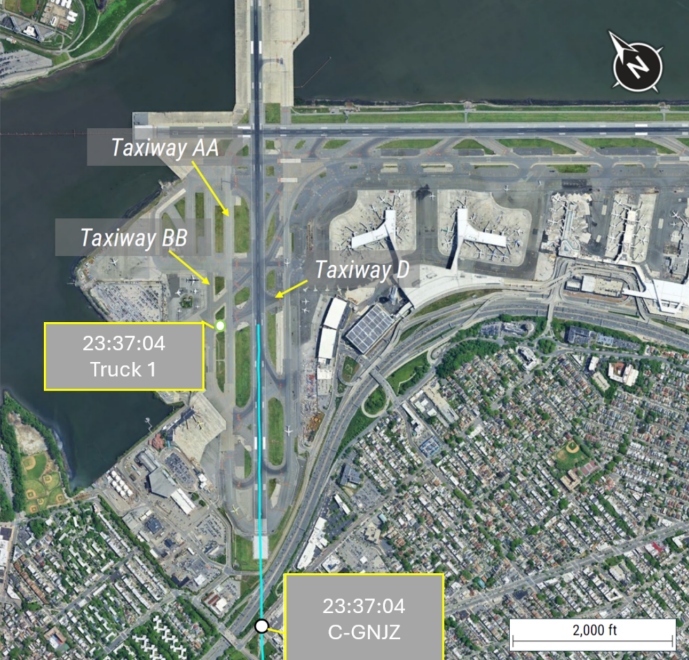
R35 (Truck 1) and Jazz flight 646 (C-GNJZ) positions at 23:37:04. Photo Source: NTSB
Communication Breakdown on the Ground
A key finding in the report centers on confusion in radio communication. One firefighter aboard the truck involved stated he heard the tower’s repeated “stop” instruction—but did not realize it was directed at his vehicle.
Only after a subsequent, more specific call did he recognize the warning and spot the aircraft’s landing lights—by then, it was too late.
Compounding the issue, one of the emergency vehicles had earlier attempted to contact the control tower, but its transmission was “obscured” by another simultaneous message on the same frequency. This type of radio congestion is a known hazard in high-tempo emergencies, particularly when multiple units are responding at once.
Controllers and Tower Operations
The report also clarifies that two air traffic controllers were on duty at the time, both highly experienced, with 18 and 19 years in the field. The NTSB found staffing levels to be consistent with standard overnight operations, and both controllers were fully qualified.
Despite this, the situation developed too quickly for effective intervention once the runway crossing clearance had been issued.
Technology Limitations: Why No Warning Triggered
Another critical factor was the failure of the airport’s surface monitoring system, ASDE-X, to generate an alert.
ASDE-X is designed to warn controllers of potential runway incursions in real time. However, in this case:
- The emergency vehicles were not equipped with transponders
- The system could not reliably distinguish or track individual vehicles
- As a result, it failed to predict the conflict between the aircraft and ground traffic
This limitation prevented both visual and aural alerts that might have provided controllers with crucial extra seconds to act.
A Tragic Convergence of Factors
While the investigation is ongoing, the preliminary report paints a picture of a multi-layered failure:
- Ambiguous radio communication
- Frequency congestion
- Late-stage runway crossing clearance
- Lack of vehicle tracking by safety systems
Each factor alone may have been manageable—but together, they created a scenario with little margin for recovery.
What Comes Next
The NTSB’s preliminary report does not assign final blame but highlights areas that will be central to the full investigation. These include ensuring clear communication during emergencies, improving ground vehicle tracking, and determining whether procedural changes are required when coordinating runway crossings with arriving aircraft.