Lufthansa Boeing 787 Nose-Gear Collapse at Frankfurt Linked to Missing Safety Pin During Maintenance
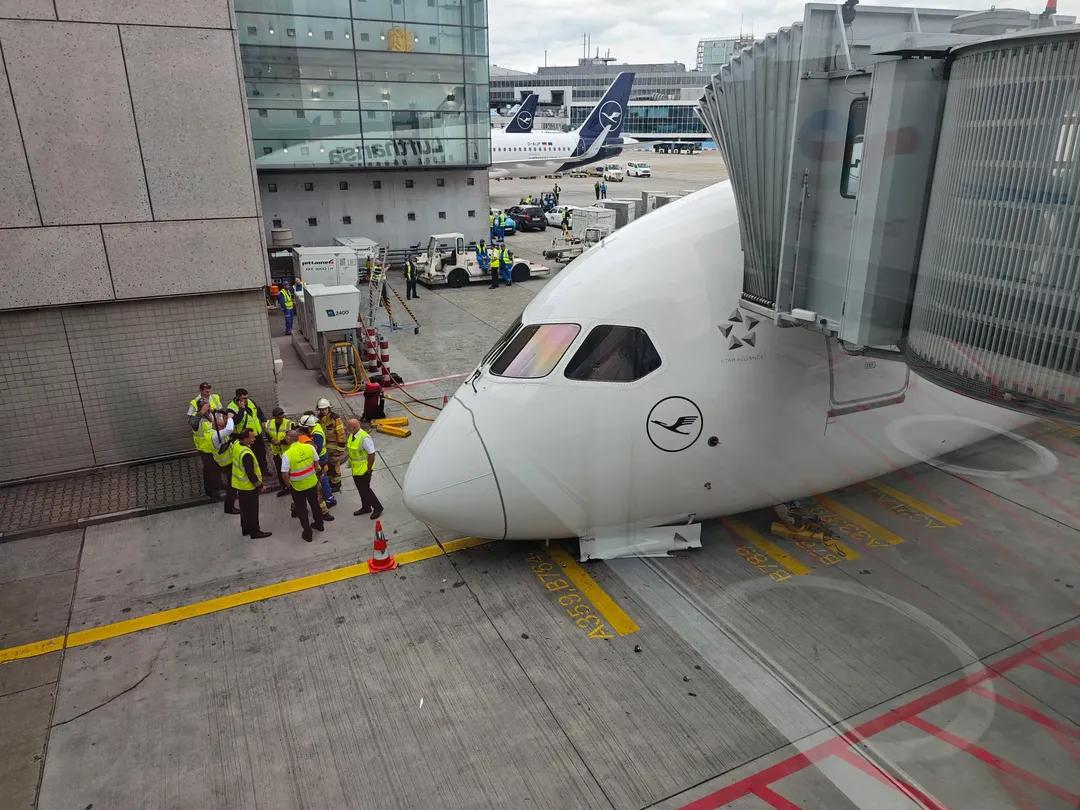
Photo Source: Surajit (@surajit_ghosh2) via X
German investigators have released new preliminary findings into the Lufthansa Boeing 787-9 accident at Frankfurt Airport that left 23 people injured, revealing that a missing nose-gear locking pin played a critical role in the incident.
The aircraft had just completed a flight from Austin, Texas, on June 4 and was parked at Gate A15 in Terminal 1, where it was being prepared for its next scheduled service to Los Angeles.
Maintenance Test Led to Unexpected Gear Retraction
According to Germany's Federal Bureau of Aircraft Accident Investigation (BFU), two maintenance technicians were inside the cockpit when the flight crew arrived. The technicians were performing troubleshooting procedures to resolve a problem involving the main landing gear door control system.
As part of the maintenance test, the landing gear lever was required to be moved to the UP position.
However, investigators found that while all four main landing gear locking pins had been correctly installed, the nose landing gear locking pin had not been inserted into the aircraft.
Without the safety pin securing the nose gear, selecting the gear lever to the UP position caused the nose landing gear to retract while the aircraft was still on the ground.
The Boeing 787's nose immediately collapsed, causing the forward fuselage and both engine nacelles to strike the ramp. At the same moment, the aircraft experienced a complete loss of electrical power, leaving the cockpit and cabin without lighting.
Locking Pin Found Stored Instead of Installed
Following the accident, investigators searched the aircraft and discovered the nose gear locking pin—with its red warning flag—inside the designated locking-pin storage box, rather than installed on the landing gear.
.jpg)
Source: BFU
The BFU noted that the pin was not found in the intended locking hole or anywhere near the nose landing gear, indicating it had never been installed before the maintenance procedure began.
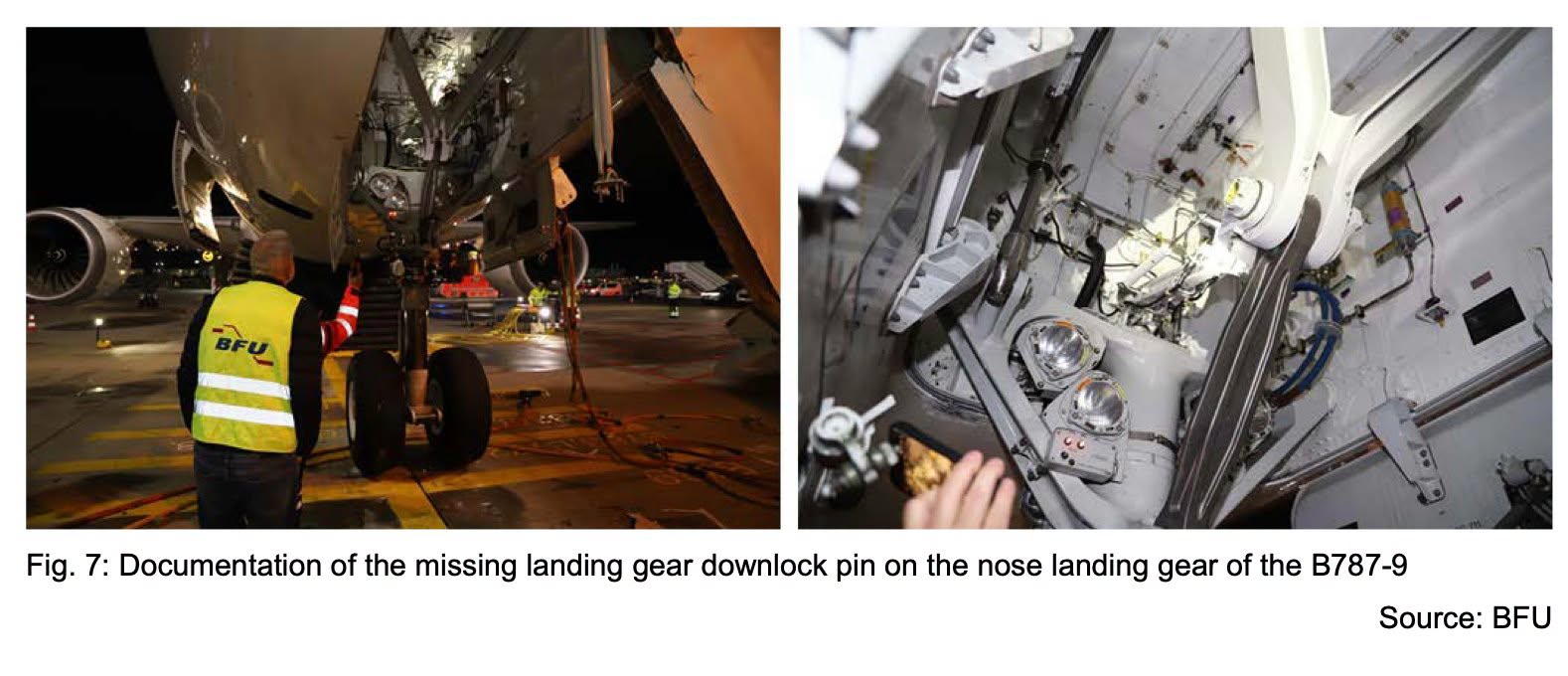
Source: BFU
The preliminary report also highlights that both the Fault Isolation Manual (FIM) and the Aircraft Maintenance Manual (AMM) explicitly instruct maintenance personnel to install the landing gear locking pins before performing this type of troubleshooting. The maintenance manual also includes illustrations showing the correct installation procedure.
Extensive Damage and 23 Injuries
The accident caused severe structural damage to the aircraft.
Investigators reported significant damage to the:
- Forward fuselage
- Nose landing gear bay
- Engine nacelles
- Aircraft electrical system
A cargo high-loader positioned at the forward cargo door was also damaged during the aircraft's collapse.
At the time of the incident, 28 people were aboard the aircraft, including:
- 13 Lufthansa crew members
- 13 ground handling personnel
- 2 maintenance technicians
Additionally, six other ground personnel were working around the aircraft.
Two people sustained serious injuries, while 20 others suffered minor injuries, bringing the total number of injured to 23. Two crew members and four additional personnel were transported to the hospital for treatment.
No Flight Recorder Data Available
Because the aircraft was undergoing maintenance rather than operating a flight, the conditions required to activate the Boeing 787's flight recorders were not met. As a result, investigators were unable to recover cockpit voice or flight data recorder information from the event.
The BFU's investigation remains ongoing, but preliminary findings point to the failure to install the nose landing gear locking pin before the maintenance test as the key factor that allowed the nose gear to retract, resulting in the collapse.