Featured ADS-B Feeder of September 2026: Jakes (ZS1TP) from South Africa
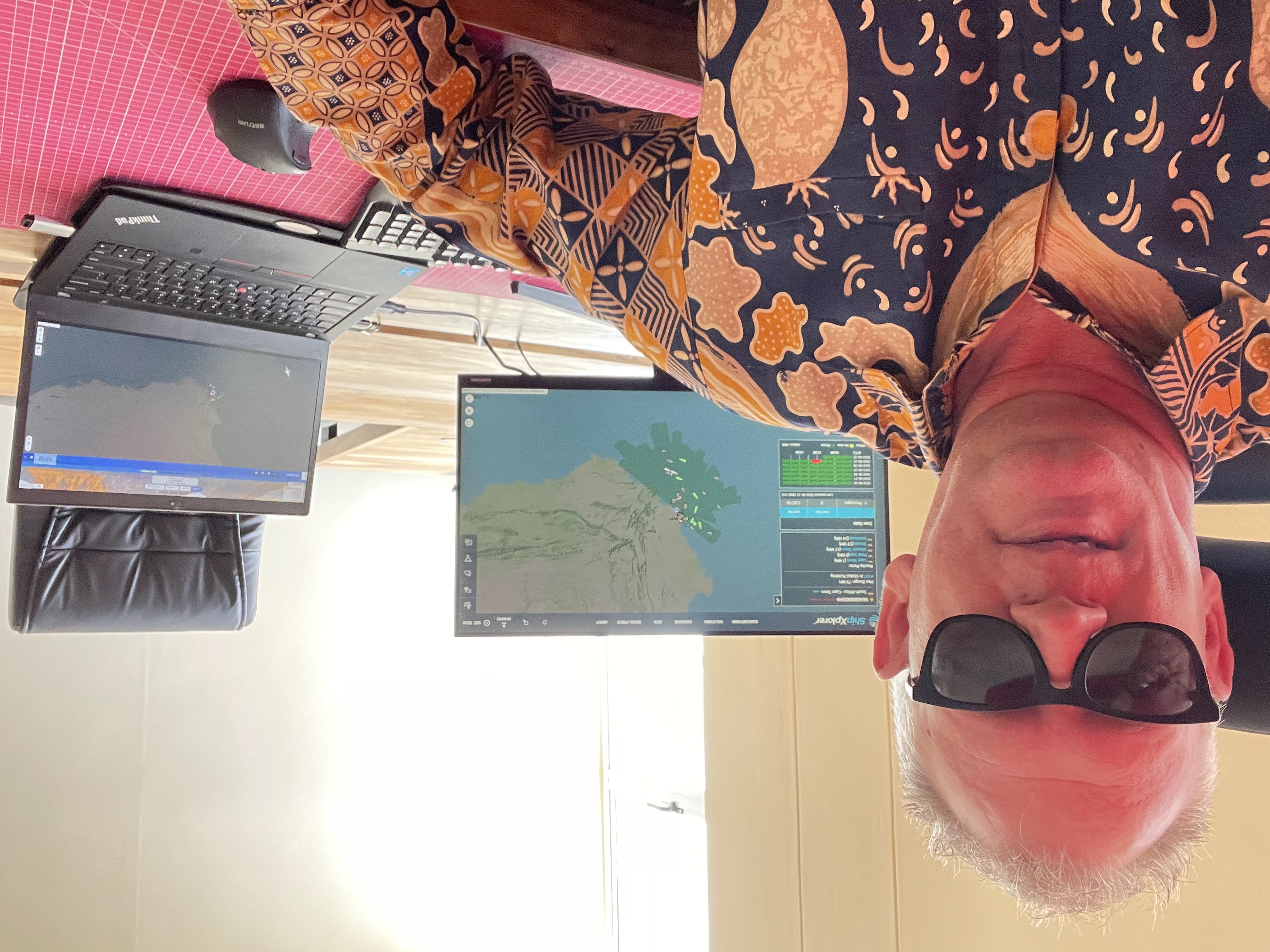
Jakes, Our ADS-B Feeder in South Africa
This month, we are featuring Jakes (ZS1TP) from South Africa, an AirNav Radar and ShipXplorer feeder who has been contributing AIS data to ShipXplorer since May 16, 2026. He operates both an AIS station for tracking vessels and an ADS-B station for tracking aircraft, both based in Cape Town, South Africa.
Cape Town
Cape Town is the legislative capital of South Africa and the seat of the country’s Parliament. It is also the country’s oldest city and the second-largest city by population, after Johannesburg. Located in the Western Cape, Cape Town is the province’s largest city and forms part of the City of Cape Town metropolitan municipality.

Photo Source: SkyPixels, CC BY-SA 4.0
His stations are registered as:
- ADS-B station: EXTRPI715803
- AIS station: SXAISD0001948
His setup is a great example of how feeders can build and improve their own receiving stations using relatively simple equipment and a bit of experimentation.
His Setup
Jakes uses a custom-built J-Pole antenna resonant at 162 MHz, which he designed and built himself. The antenna is mounted approximately 2.5 meters above the roof pitch, with the overall setup reaching around 3 meters above ground level. His location sits approximately 22 meters above sea level.
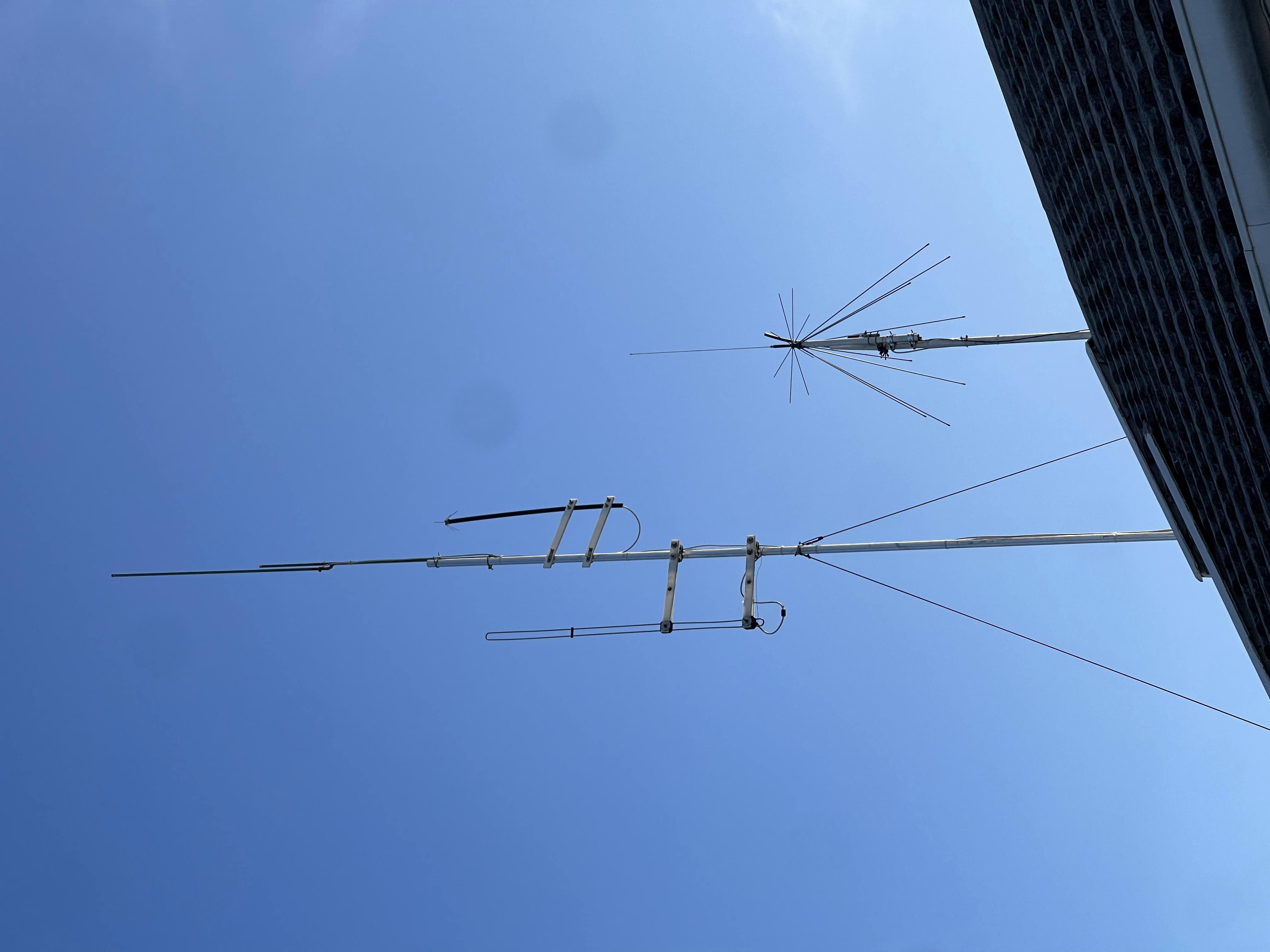
ADS-B & AIS Antennas Operated by Jakes
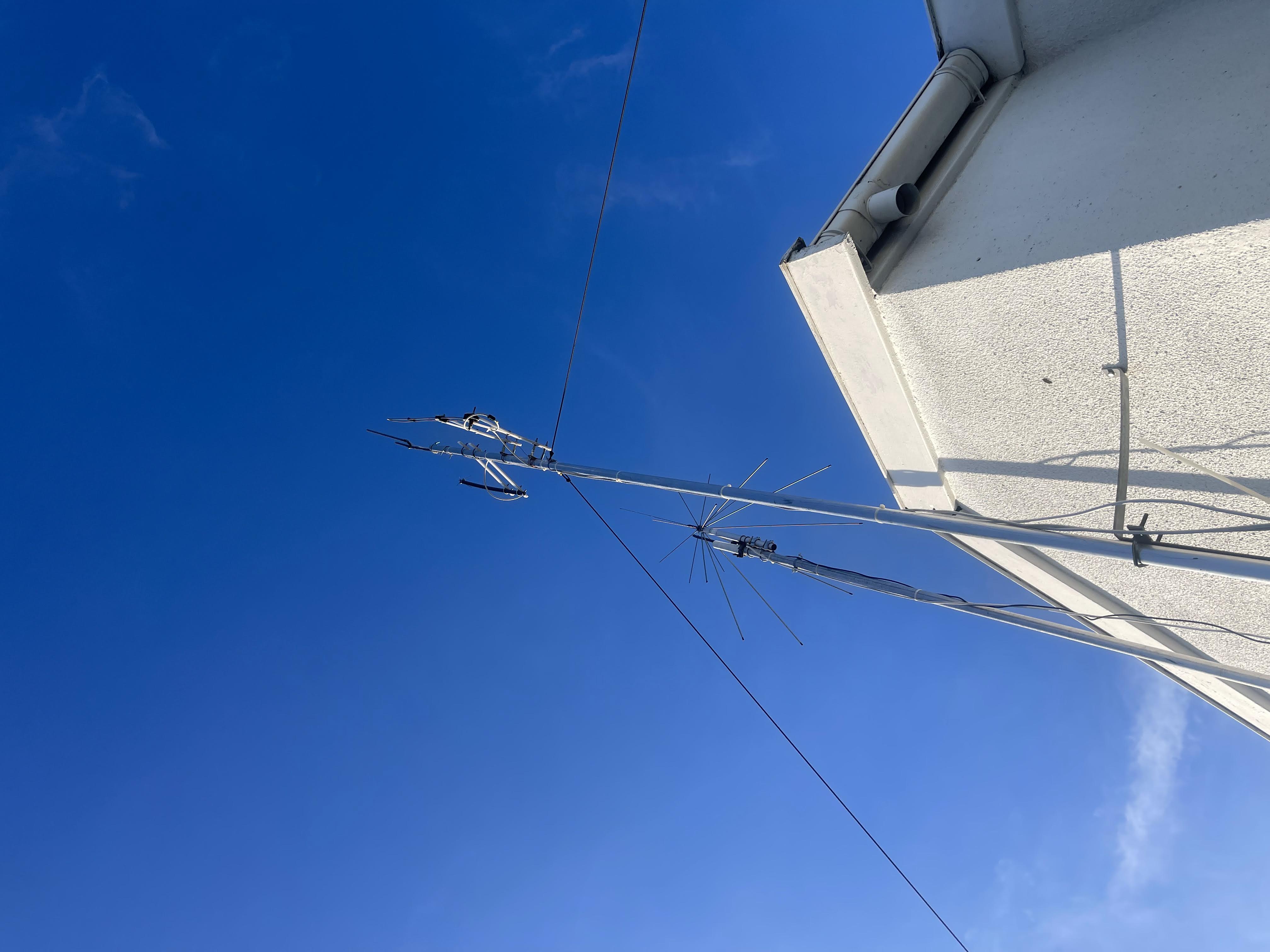
ADS-B & AIS Antennas Operated by Jakes
The installation uses brackets mounted to the side of his house, supporting a 6-meter pole and a 3-meter pole. Jakes describes the setup as a work in progress, with ongoing improvements to the station.
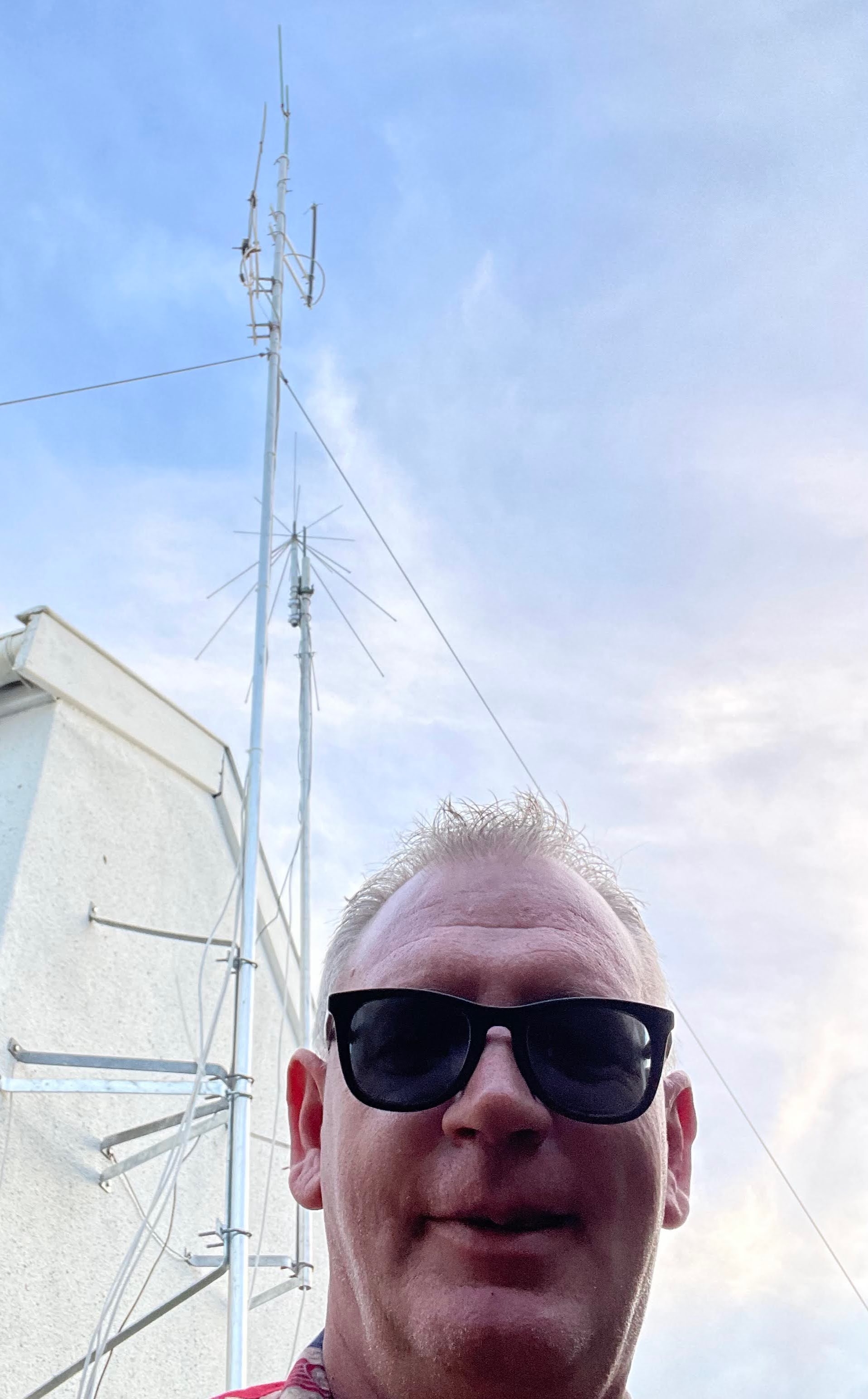
Jakes And His Antenna Setup
His advice to other feeders is straightforward:
“Height is your friend!”
And he has already seen the benefits.
A Station Reaching Beyond 180 Nautical Miles
His station can receive AIS signals from vessels more than 180 nautical miles away, demonstrating the impressive range achievable with the right combination of antenna height, location, and equipment. The record reception of a vessel approximately 691 kilometers (373 nautical miles) away, off the coast of Namibia, shows just how far a well-positioned AIS station can reach under favorable conditions.
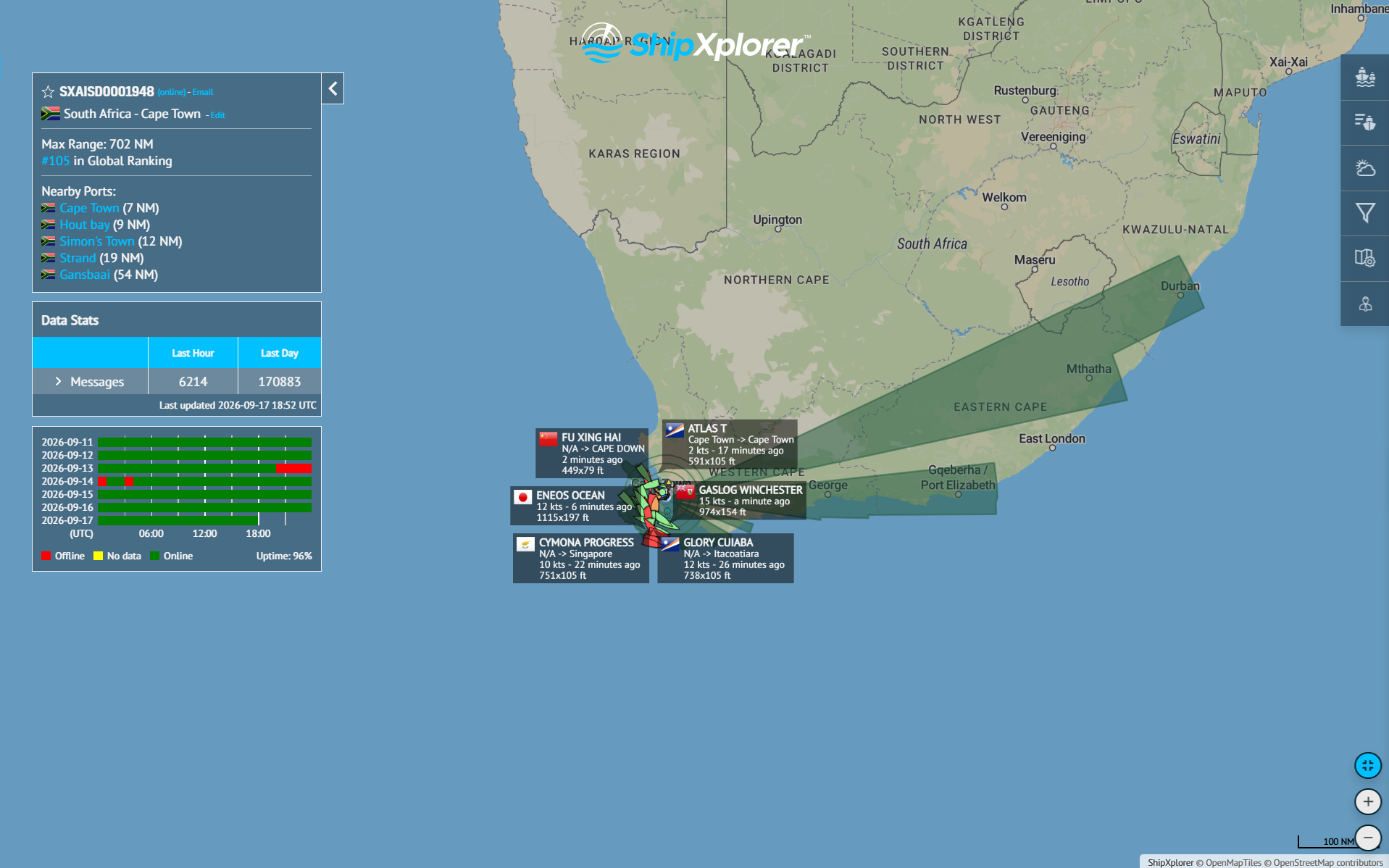
ShipXplorer AIS Station (SXASD0001948)
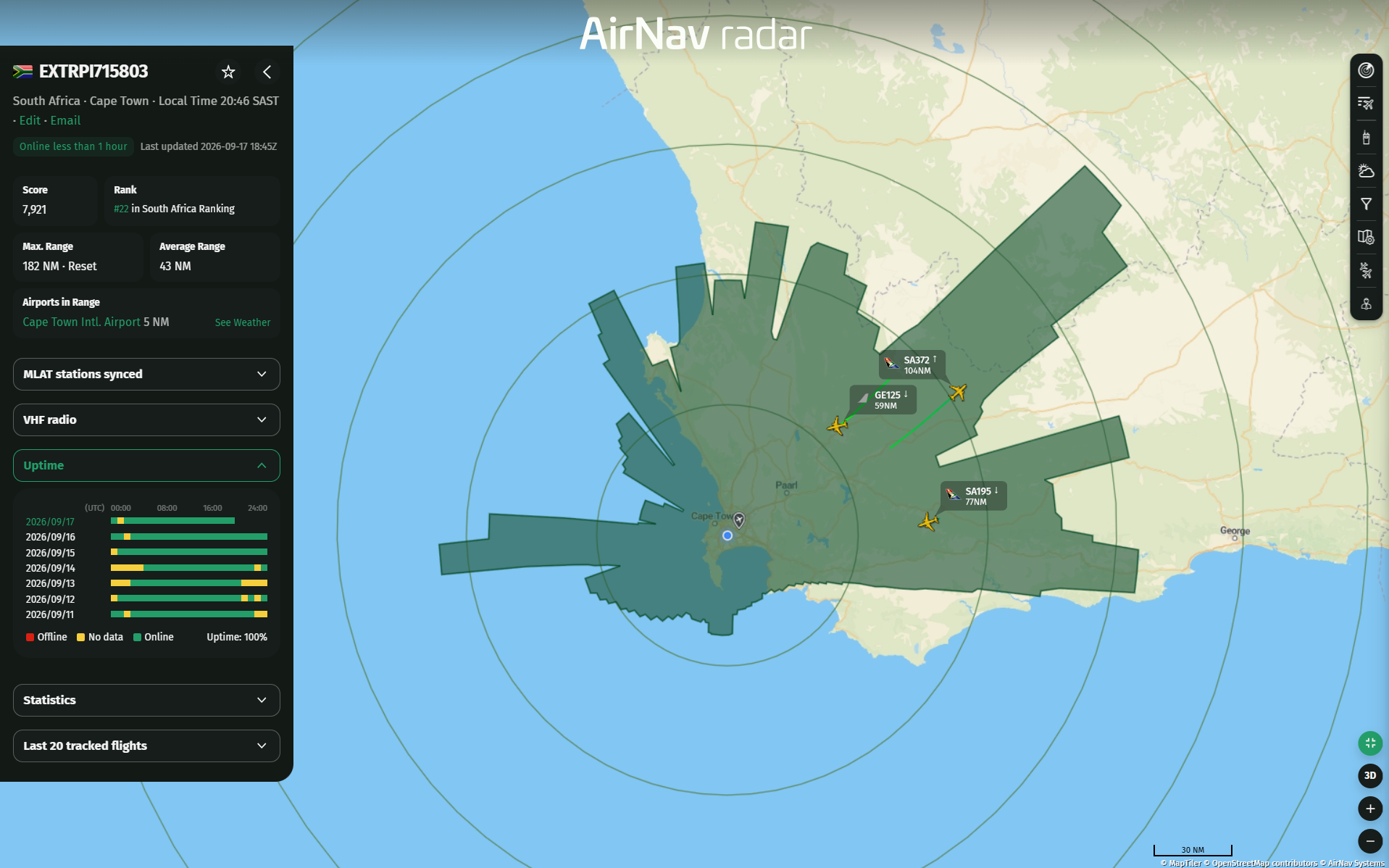
AirNav Radar ADS-B Station (EXTRPI715803)
The reception occurred shortly after he raised his antenna by approximately one meter. Rather than assuming it was simply an unusual reception event, Jakes cross-checked the vessel's position across several AIS platforms to verify the data. The result was accurate, making it an especially exciting moment for his station.
Finding the right frequency
Jakes recommends building an antenna that is resonant at the received frequency. His antenna is designed around 162 MHz, which is close to the two standard AIS frequencies:
- AIS 1: 161.975 MHz
- AIS 2: 162.025 MHz
When designing the antenna, Jakes consulted several amateur-radio resources and antenna calculators. He also used AI models to help with the calculations and dimensions.
For anyone starting their own feeder station, his experience demonstrates how antenna design, elevation, and continuous experimentation can significantly improve reception range.
One station, two types of data
His Raspberry Pi 3B runs his AIS-catcher setup, receiving vessel data that is sent to ShipXplorer. The same station also includes an ADS-B receiver for aircraft, with that data contributing to AirNav Radar.
ShipXplorer is AirNav Systems' recently launched ship-tracking platform and sister service to AirNav Radar. While AirNav Radar focuses on aircraft tracking, ShipXplorer provides real-time vessel tracking and maritime data. Both platforms rely on a global network of receivers and contributors to expand coverage.
Discovering AirNav
The feeder discovered ShipXplorer and AirNav Radar while looking for platforms where he could contribute his AIS and ADS-B data.
“I was genuinely excited to find both platforms; it was exactly the kind of great service I was looking to support.”
One of his favorite aspects of the platform is the way coverage is presented on the local map. He describes the interface as clean and uncluttered, while particularly enjoying the ability to hover over individual vessels and immediately access their information.
A growing feeder community
From a custom-built antenna in South Africa to a vessel receiving the signal nearly 700 kilometers away, Jakes' station demonstrates the role individual feeders can play in expanding real-time maritime and aviation coverage.
We want to thank Jakes (ZS1TP) for contributing to both the ShipXplorer and AirNav Radar communities and for sharing his experience with other feeders.
Interested in Becoming an AIS Feeder?
Do you have an AIS receiver and want to contribute vessel data to ShipXplorer? You can apply to receive a compatible receiver from us or connect your existing AIS setup and start sharing data with the ShipXplorer community.
Apply for a receiver or submit data from your existing AIS receiver:
ShipXplorer.com/addcoverage
Join the AirNav Radar Network
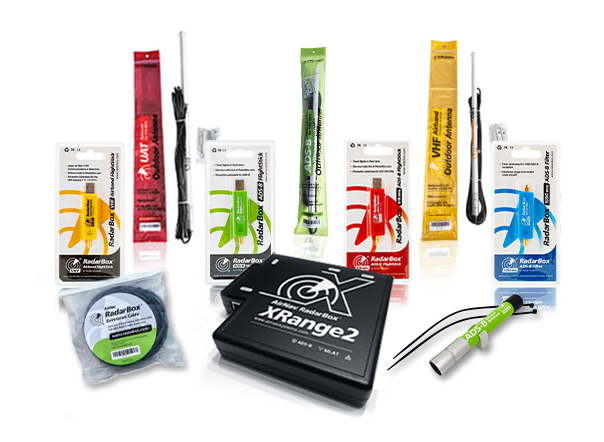
Discover our ADS-B hardware-focused products and explore the AirNav Radar store here.
Want to join the AirNav Radar feeder community? Apply for one of our free ADS-B receiver kits, or connect your existing receiver and share your data with us. As a thank-you, feeders receive a free Business Account with access to additional AirNav Radar features. Get started at airnavradar.com/addcoverage.
Have an interesting setup or a story you’d like us to feature? We’d love to hear from you. Contact [email protected] and tell us about your station.