Featured ADS-B Feeder for March 2026: Tim Sulzberger from Australia

Tim Sulzberger, our ADS-B feeder in Australia
For March 2026, we're excited to feature one of our newest contributors to the AirNav Radar community — Tim Sulzberger from Patterson Lakes, Victoria, Australia. Despite being a very recent addition, Tim has already built an impressive DIY setup, embraced experimentation, and demonstrated the spirit of innovation that defines the AirNav Radar feeder community.
Located in Patterson Lakes, VIC, a suburb approximately 35 km southeast of Melbourne’s Central Business District, Tim’s station sits in a geographically interesting area. The suburb, part of the City of Kingston, recorded a population of 7,793 residents in the 2021 census. Positioned just south of Moorabbin Airport, well south of Melbourne Airport, and close to Port Phillip Bay and the Mornington Peninsula, a location that offers a diverse mix of aviation traffic — from commercial routes and coastal operations to light aircraft activity.
.jpg)
Diliff, CC BY 3.0
Although he has only been feeding data for about two weeks, he describes the experience as both enjoyable and educational:
"I've only been feeding for about two weeks. I'm a very new member of the community, but I've been having a good time exploring and learning."
A DIY Setup with Impressive Range
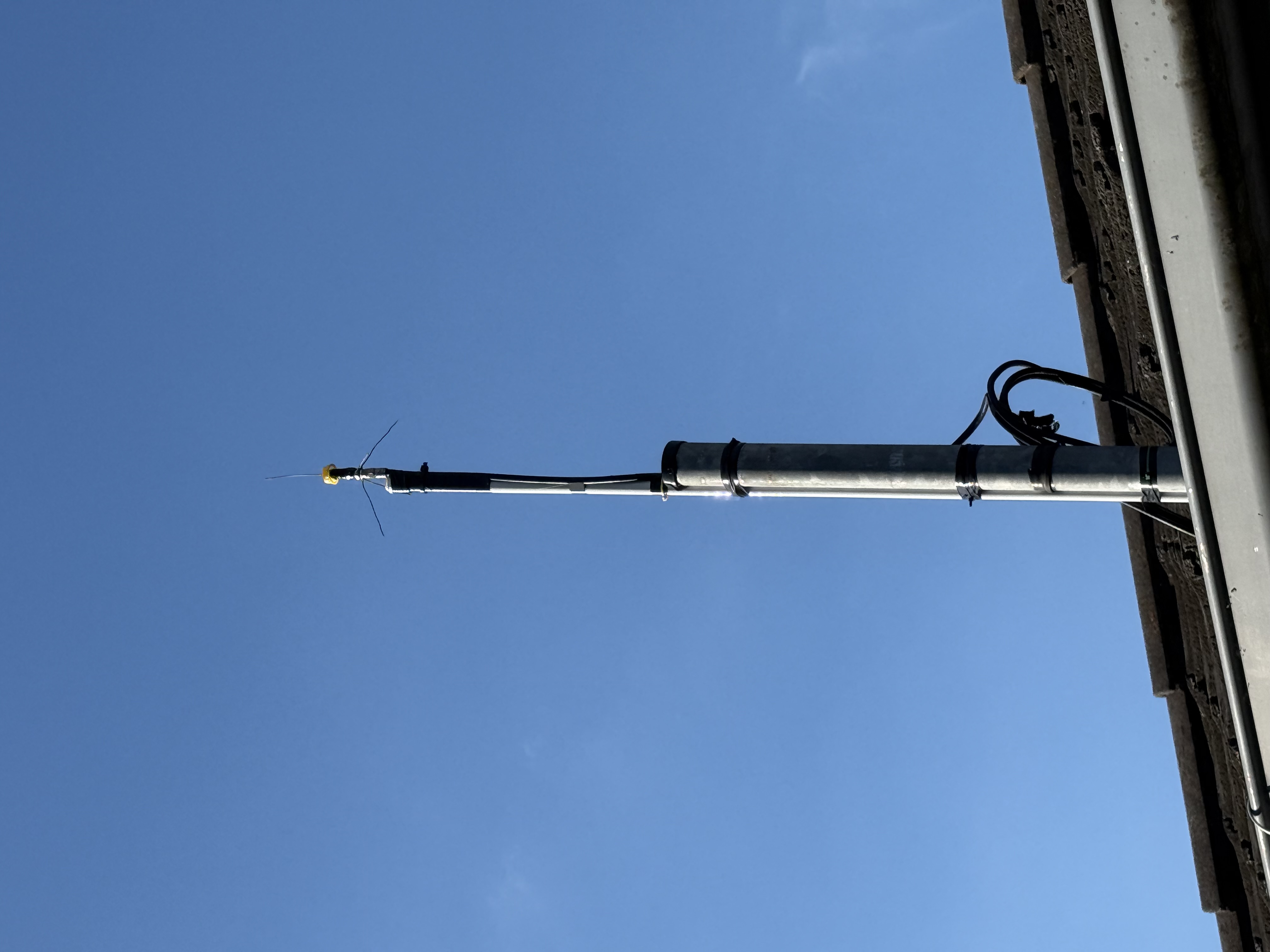
His ADS-B Antenna
Tim’s antenna is mounted approximately 3 metres above ground level, in a relatively flat area roughly 10 metres above sea level. Despite the modest setup, the results have exceeded expectations.
"I live in a geographically interesting spot... south of Moorabbin Airport, well south of Melbourne Airport, and adjacent to several busy flight paths. To the south and east is Port Phillip Bay and the Mornington Peninsula, with its nice coastline, so there's a steady mix of commercial routes, light aircraft, and coastal traffic passing through."
Even with the modest height and DIY nature of the installation, Tim reports:
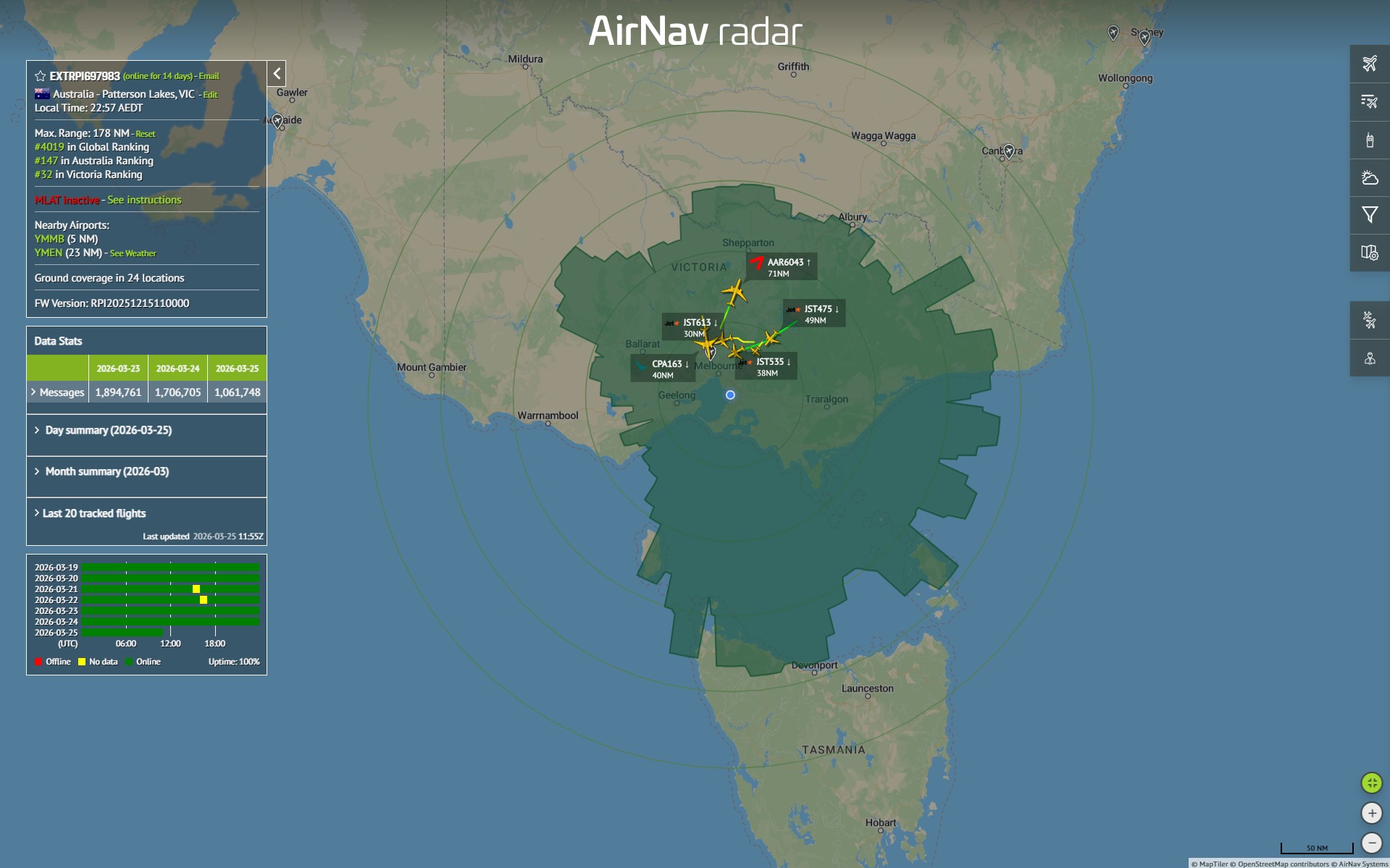
"Despite the modest antenna height and DIY nature of it, I'm getting a range of around 150 nautical miles, which I'm really happy with for now."
Since then, his station has continued to improve, now achieving over 178 nautical miles of range, an impressive result for a low-cost, home-built setup.
His setup includes:
- Raspberry Pi Zero 2W
- AirNav Radar USB FlightStick
- DIY antenna
- Repurposed coaxial cable
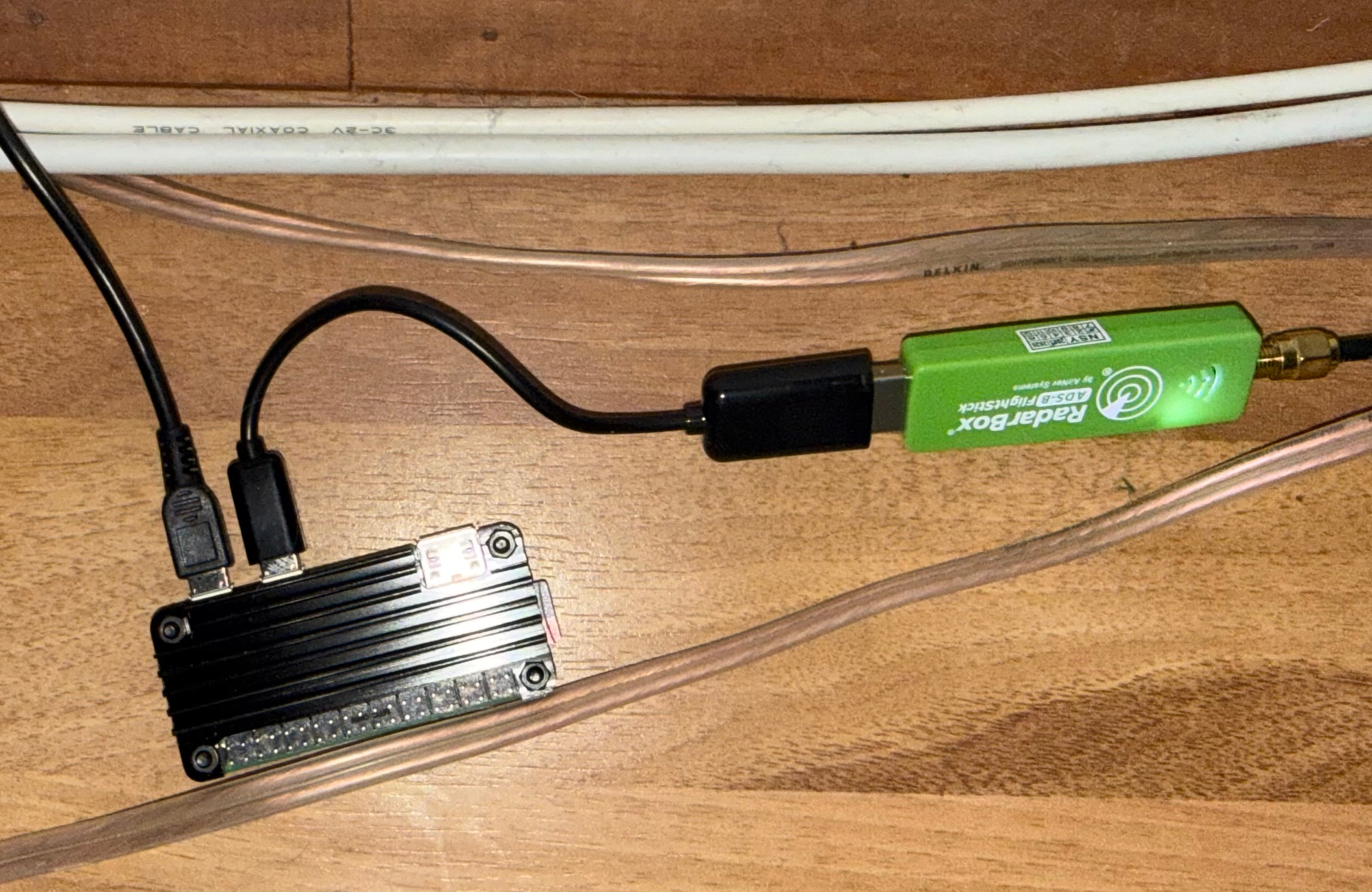
AirNav Radar USB FlightStick
Tim also found a clever way to reuse existing infrastructure:
"If you're in Australia, have a look around your walls for old Foxtel coaxial connections... There are thousands of homes around the country with these just sitting there doing nothing... I repurposed mine and I probably wouldn't have done it otherwise."
Software and Smart Automation
Also focused on keeping the software side lightweight and reliable, noting, "I'd strongly recommend running a lightweight Linux distro on a Raspberry Pi. I used Raspberry Pi OS Lite and managed everything over SSH." To maintain stability and uptime, he adds, "For keeping the API and other processes running reliably, I used PM2... Gotta resist the urge to over-engineer it early on." His curiosity quickly expanded into a broader home automation project, explaining, "I now have a Raspberry Pi running a custom flight API, logging flights to a local SQLite database, and feeding a Home Assistant dashboard on my home server."
Rediscovering MQTT and Home Notifications
One of the most creative integrations involved MQTT: "The Raspberry Pi acts as the publisher, my home server as the broker, and the TV as the client." Now, when aircraft fly nearby, "a small unobtrusive notification pops up on the TV... Now, when we hear something outside, we can glance at the screen and know."
Inspiring Curiosity at Home
Sulzberger also shared how the project sparked curiosity within his family, saying, "I showed my kids what I'd built and got the classic 'what are you doing, Dad?' When I explain it, and they go '...what? Why? How? That bit of curiosity is exactly the reaction I'm going for."
How It All Started
"My wife had been a regular user of similar flight tracking sites for years... One thing led to another, I bought an AirNav Radar USB FlightStick on Amazon and here we are."
The Best Part of Feeding
For Tim, the biggest reward goes beyond aviation tracking. "It's been a fun way to play with publishing APIs and working with JSON data in a low-stakes environment outside of work." He also appreciates the collaborative nature of the community, adding, "I also enjoy that it is a decentralised system, with makers and contributors getting mutual benefit... Not enough of that in the world."
Welcome to the Community, Tim!
His story perfectly represents what the AirNav Radar community is all about — curiosity, creativity, and collaboration. From a DIY spider antenna to 178 nautical miles of range, Tim has already made a strong impression in just a short time.
Join the AirNav Radar Network
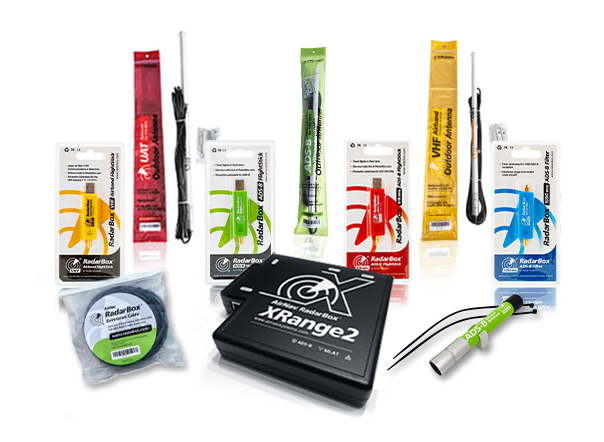
Discover our ADS-B hardware-focused products and explore the AirNav Radar store here.