Boeing and U.S. Navy Mark Breakthrough with First Operational MQ-25A Stingray Flight
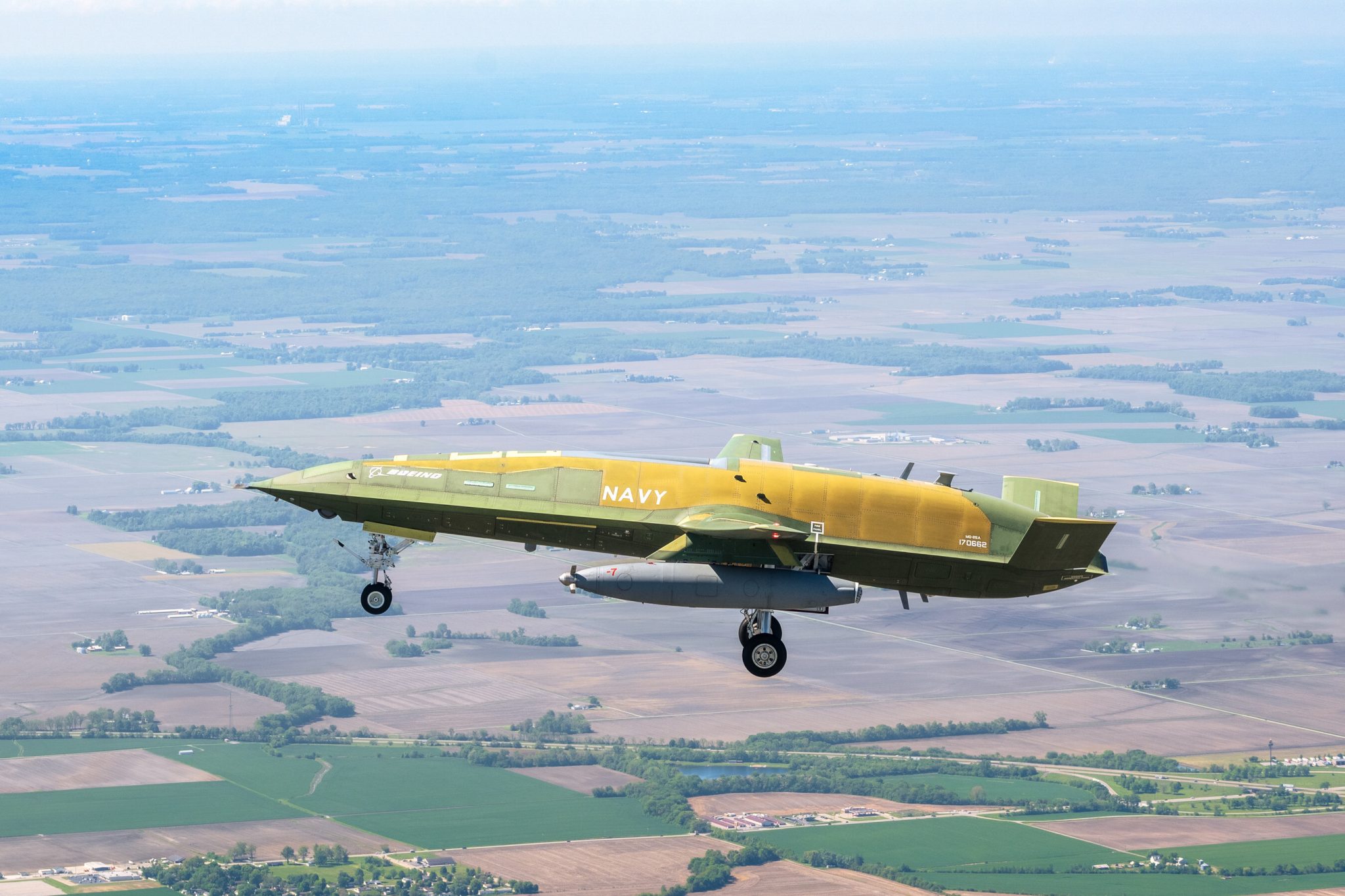
The first operational United States Navy MQ-25A Stingray flies over southern Illinois during its successful two-hour inaugural flight on April 25. (Photo: Boeing / Eric Shindelbower)
Boeing and the United States Navy have completed the first test flight of the operational MQ-25A Stingray, marking a key milestone in efforts to integrate uncrewed aircraft into carrier operations.
The two-hour flight saw the aircraft autonomously taxi, take off, navigate, and land while responding to inputs from a ground control station. According to the companies, the mission validated flight control systems, navigation performance, and integration with command-and-control infrastructure.
The MQ-25A is designed to provide aerial refueling for carrier-based aircraft, extending the operational range of the Navy’s air wing. By assuming the tanker role, the platform is expected to reduce reliance on crewed assets such as the F/A-18 Super Hornet, allowing them to focus on combat missions.
The program is widely seen as an early step toward manned–unmanned teaming in naval aviation, with potential implications for how carrier air wings are structured and deployed.
Track live flights
The aircraft flown is the first of four engineering development models being produced under an $805 million contract. Further testing is planned before the program advances to carrier suitability trials at Naval Air Station Patuxent River.
The development comes as the U.S. military accelerates the integration of autonomous systems into operational environments, particularly in complex domains such as carrier aviation.