Black Box Data Reveals Final Seconds of Fatal Boeing 767 Crash at Miami Airport
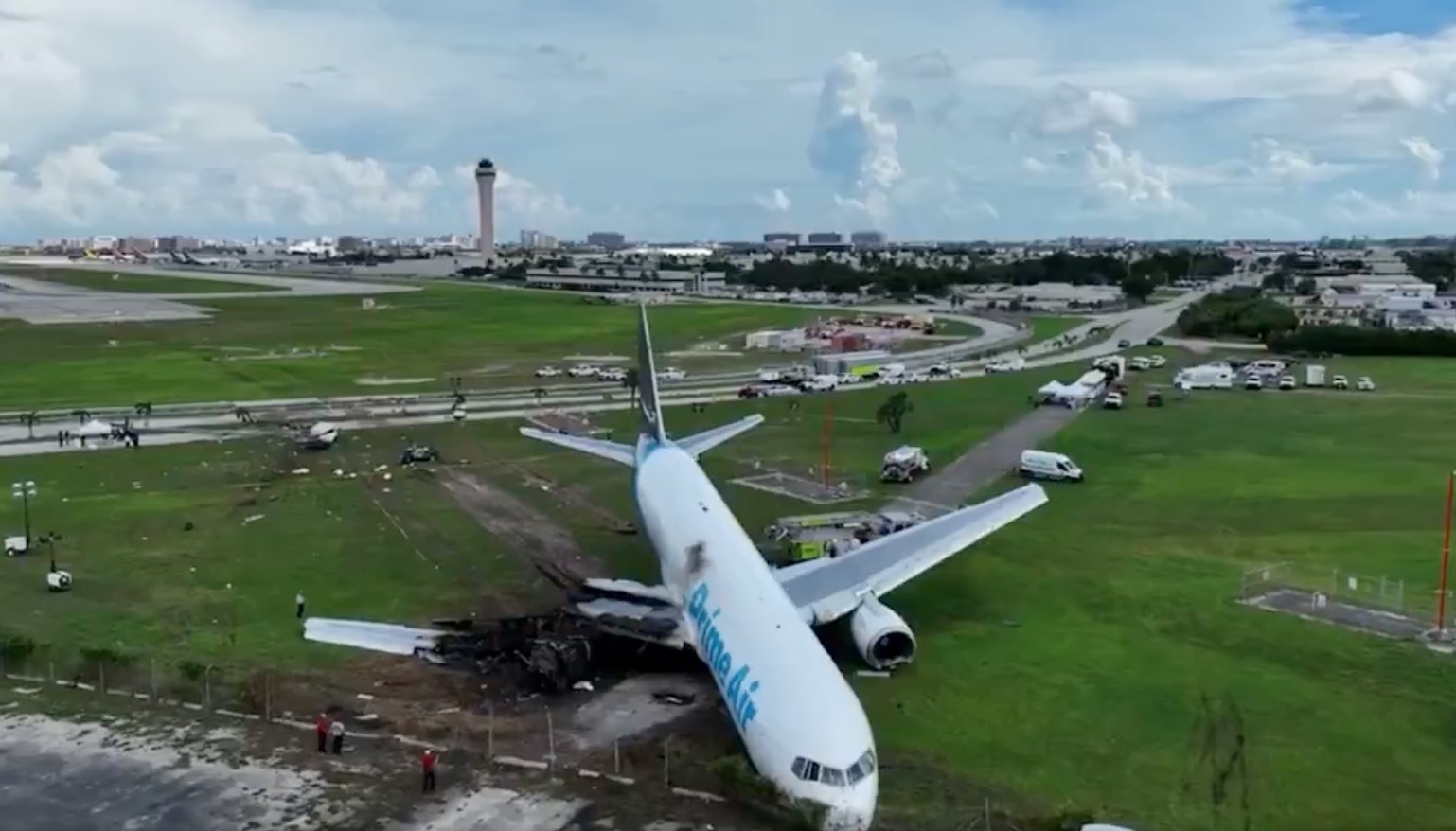
Photo Source: National Transportation Safety Board via AirLive.net
New information recovered from the flight recorders of the Amazon Prime Air Boeing 767 that crashed at Miami International Airport is providing investigators with a detailed picture of the aircraft’s final seconds before it left the runway.
The 32-year-old Boeing 767-33A, operated by 21 Air as Flight 7598, was completing a flight from San Juan, Puerto Rico, to Miami when it encountered wet conditions and nearby weather activity during its approach to Runway 30.
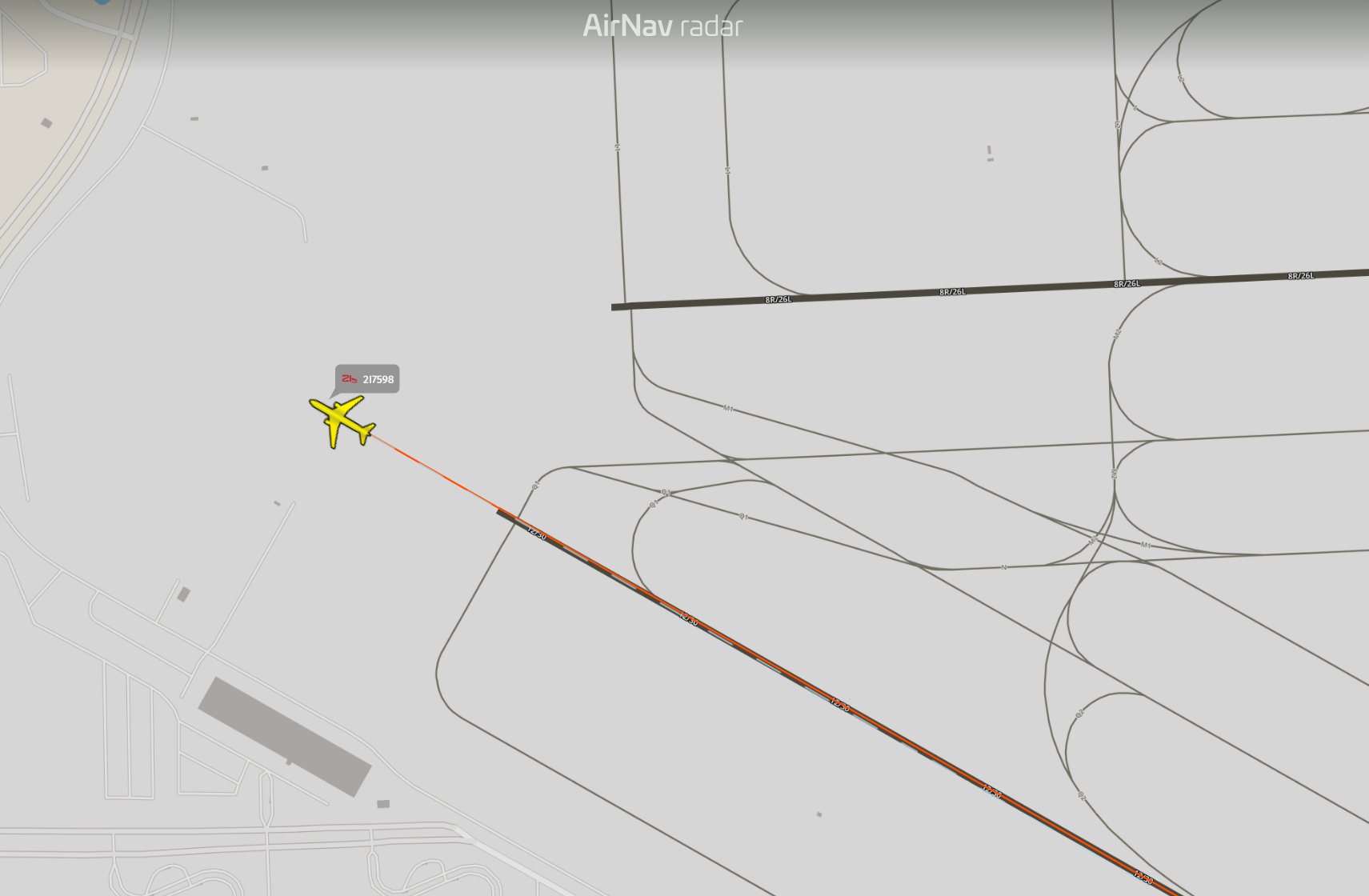
Amazon Prime Air Boeing 767-300F Veered Off the Runway
The aircraft ultimately overran the runway by approximately 1,300 feet (396 meters), crossed the airport perimeter and struck vehicles on a nearby roadway. Five people were killed, and two others were critically injured.
The National Transportation Safety Board (NTSB) has been examining the aircraft’s flight data and cockpit recordings to establish exactly how the landing developed and why the crew attempted to go around only after touchdown.
A Landing That Quickly Became Unstable
The flight data recorder shows that the aircraft did not initially settle onto the runway in a conventional landing sequence.
Around 30 seconds before the end of the recording, the nose landing gear and right main landing gear touched the runway while the left main landing gear remained off the surface. It took another 11 seconds for the remaining main gear to make contact.
At that point, the aircraft was already traveling at approximately 134 knots. The data indicate that braking had been applied initially, but the aircraft continued moving rapidly along the runway. Investigators are examining whether the unusual touchdown attitude, runway conditions, wind, and approach characteristics contributed to the difficulty in stopping the aircraft.
The Attempt to Go Around
One of the most significant findings from the recorder data comes several seconds after all three landing gear assemblies were on the runway. The crew released the wheel brakes and advanced the engines toward go-around power, indicating an attempt to reject the landing and get the aircraft airborne again.
The recorded data does not show speed brake or thrust reverser deployment before the engines were advanced for the attempted go-around. With the aircraft continuing to decelerate and limited runway remaining, the maneuver did not succeed.
Approximately four seconds later, the engines were brought back toward idle, and maximum braking was reapplied. The Boeing 767 continued toward the end of the runway at increasing risk of an overrun.
Final Seconds Before the Overrun
The aircraft's recorded ground speed had fallen to about 117 knots when the attempted go-around was abandoned. Seven seconds before the end of the flight recorder data, acceleration readings began to change sharply, consistent with the aircraft leaving the paved runway environment. The final recorded ground speed was approximately 65 knots.
The Boeing then broke through the airport perimeter and continued into the area beyond the runway, where it struck vehicles and came to rest near cargo facilities.
The sequence from the first abnormal touchdown to the runway excursion unfolded in less than half a minute, leaving the crew with very little time to recover.
Five People Killed on the Ground
The aircraft crossed onto a perimeter roadway and struck a Ford Econoline van carrying seven employees of an aircraft cleaning contractor.
Five people inside the van died, while two others suffered critical injuries. The aircraft subsequently struck another vehicle and additional fencing before finally coming to a stop in a grassy area near cargo warehouses.
Emergency crews faced a complex response involving the aircraft, damaged vehicles, and a fuel leak. The two pilots survived the crash and were later released from hospital care.
What Investigators Are Examining
Crew actions
Investigators are examining the timing of the decision to attempt a go-around and the sequence of braking, throttle, and other aircraft-system inputs during the landing. They will also examine cockpit communications and crew coordination to determine how the situation developed and why the landing was not discontinued earlier.
Wind and weather
Weather conditions around Miami are another major area of interest. Investigators are evaluating the effects of localized rain and weather cells, as well as wind conditions, during approach and landing.
A potential tailwind is among the factors being examined because wind direction and strength can significantly affect an aircraft's groundspeed and landing distance.
Runway safety
The investigation is also looking at the runway environment and the protection available beyond Runway 30.
One question is why the runway did not have an Engineered Materials Arresting System (EMAS), which is designed to help stop aircraft that overrun a runway by allowing the landing gear to sink into a specially engineered arrestor bed.
Flight 7598: Timeline of a Fatal Runway Excursion in Miami
Departure and Approach
At approximately 12:00 PM EDT, 21 Air Flight 7598 departed San Juan (SJU), Puerto Rico, bound for Miami (MIA). By 1:50 PM EDT, the aircraft was aligning for touchdown on Runway 30 amid localized rain and thunderstorm activity.
The Final 30 Seconds
Flight data recovered from the incident paints a detailed picture of a landing that unraveled in just half a minute.
- 30 seconds before the end of the recording (158 knots): An unstable initial touchdown occurred. The nose gear and right main gear made contact with the runway, while the left main gear remained airborne.
- 23 seconds before the end (146 knots): Wheel brakes were initially applied during the touchdown roll.
- 19 seconds before the end (134 knots): The left main landing gear finally touched down — 11 seconds after initial gear contact. No speed brakes or thrust reversers were deployed.
- 15 seconds before the end (120 knots): A go-around was initiated. Brakes were released, and engine throttles were advanced to full go-around thrust.
- 11 seconds before the end (117 knots): The go-around was aborted. Throttles were reduced back to idle, and wheel brakes were reapplied, remaining applied through the end of the recording.
- 7 seconds before the end (96 knots): Lateral, longitudinal, and vertical acceleration values shifted dramatically as the plane overran the pavement.
- End of recording (65 knots): The final recorded ground speed as the aircraft broke through the perimeter fence and struck ground vehicles.
The Impact
Approximately two minutes later, at 1:53 PM EDT, the aircraft came to a final stop after striking a cleaning service van — resulting in 5 fatalities and 2 injuries — and an SUV outside airport grounds. Emergency response began immediately.
The NTSB's continuing analysis of the flight recorders, weather conditions, runway environment, aircraft performance, and crew actions is expected to determine how the Boeing 767 went from an unstable landing to a fatal runway excursion in a matter of seconds.
.png)