AirNav will discontinue support for AirNav Live Flight Tracker for Windows on July 15, 2026

AirNav Live Flight Tracker
For more than two decades, AirNav Systems has been at the forefront of aviation tracking technology. Long before flight tracking became something you could do from a smartphone, AirNav was bringing the skies into homes, offices, newsrooms, and control centers around the world.
On July 15, 2026, AirNav will officially end support for AirNav Live Flight Tracker for Windows, first introduced in the early 2000s.

AirNav Live Flight Tracker
Before Flight Tracking Became Mainstream

AirNav Live Flight Tracker
When AirNav launched its Windows applications, the aviation landscape looked very different. There were no modern flight tracking websites. ADS-B technology was still in its infancy, and enthusiasts relied on dedicated software, serial ports, antennas, and desktop computers to explore the skies. AirNav helped make professional-grade flight tracking available to everyone.
The World's First Integrated Flight Tracking Platform
In the early 2000s, AirNav Live Flight Tracker set a new standard for aviation enthusiasts by integrating FAA ASDI radar data with AirNav Systems' global tracking network, providing real-time flight monitoring on a scale never seen before.
For the first time, users could monitor aircraft flying across North America, Europe, and many other regions from a single application.
Powered by the award-winning AirNav technology, Live Flight Tracker introduced features that were years ahead of their time, including:
- Real-time tracking of airline and general aviation aircraft
- Flight following by airline, airport, or individual flight
- Aircraft registration information
- Real-time METAR weather
- Worldwide airport database, including small airfields
- Automatic user location detection
- Map centering on airports, cities, or navigation fixes
- Low-bandwidth optimized data delivery
- Modern graphics and an intuitive interface
- Automatic saving of user preferences
- Different colors for various flight phases
- Faster screen refresh and optimized data processing
- Screenshot sharing
- Unlimited simultaneous tracked flights
These features helped establish AirNav as a pioneer of internet-based flight tracking.
When Concorde Appeared on Our Screens
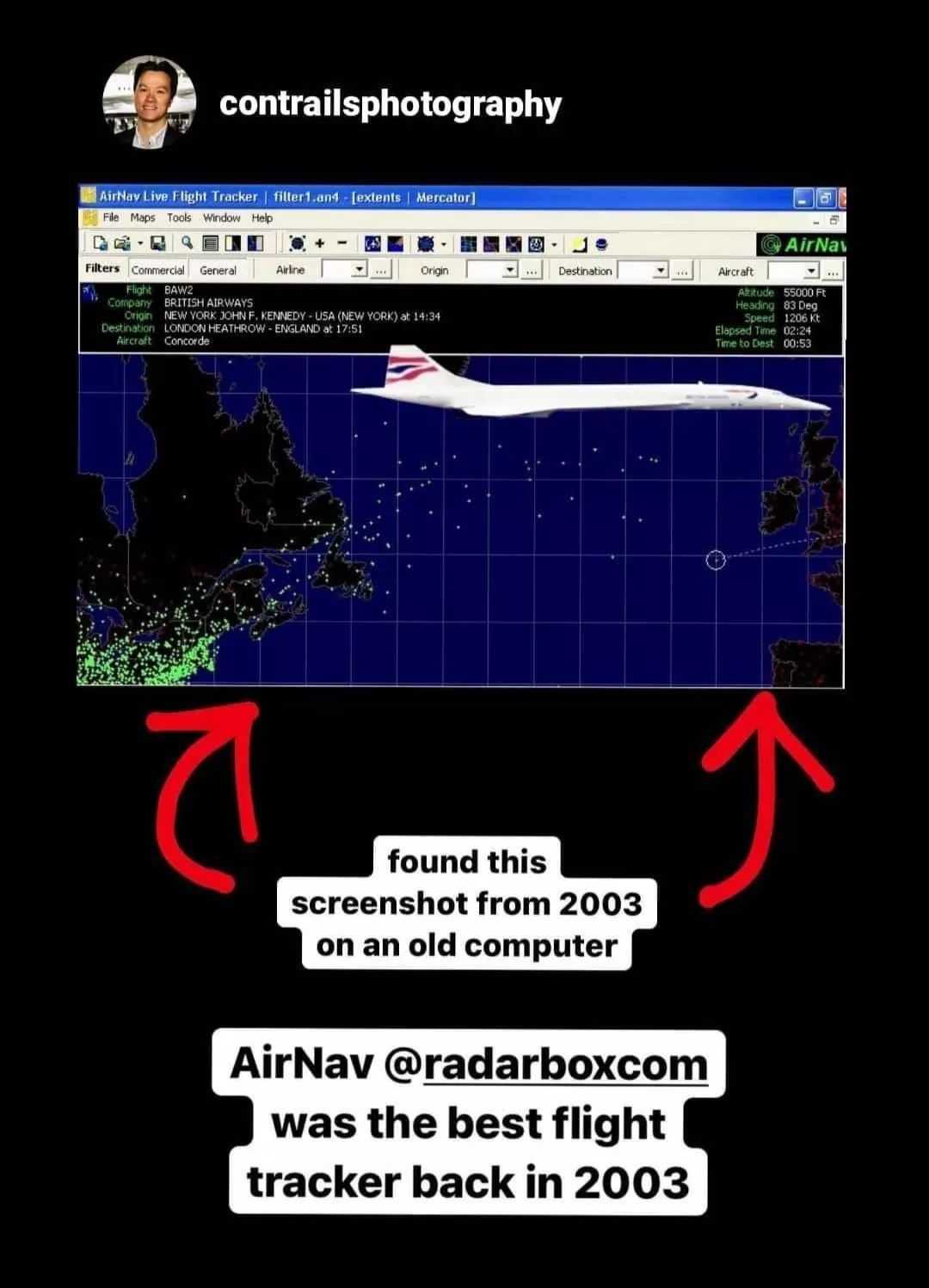
Image courtesy of @contrailsphotography
One of our favorite memories comes from the Concorde era. Instagram creator @contrailsphotography recently shared a screenshot from AirNav Live Flight Tracker dating back to 2003.

Image courtesy of @contrailsphotography
The image showed British Airways Flight BAW2 traveling from New York (JFK) to London Heathrow aboard the legendary Concorde.
The aircraft appeared on the screen, cruising at:
- 55,000 feet
- Mach 2
- More than twice the speed of sound
For many aviation enthusiasts, those moments defined an entire generation of desktop flight tracking.
A Product That Helped Shape Modern Flight Tracking
AirNav Live Flight Tracker was developed during an era when software was installed from CDs, updates were downloaded manually, and desktop computers were the center of every enthusiast's aviation setup.
Many of the concepts introduced by the software—including global flight visualization, integrated weather, aircraft information, and multi-source tracking—have since become standard features on today's flight-tracking platforms.
Support Ending on July 15, 2026
Beginning July 15, 2026, AirNav Live Flight Tracker will no longer receive technical support, maintenance, or software updates on Windows.
This change does not affect AirNav Radar (formerly AirNav RadarBox)/ AirNav Systems or any other current AirNav products and services, which remain fully available and supported.
Questions?
If you have any questions regarding the end of support for AirNav Live Flight Tracker, our team will be happy to assist you.