Airbus A350-1000ULR Is Flying for 24 Hours and Has Achieved Mach 1 Ground Speed
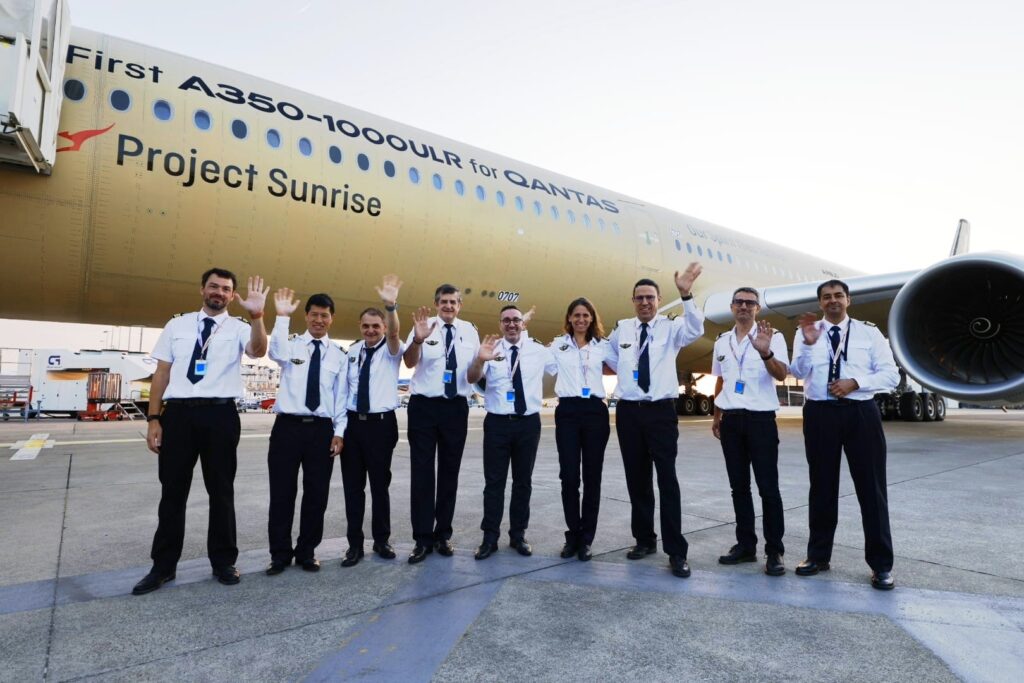
An Airbus A350-1000ULR is pushing the boundaries of commercial aviation, embarking on one of the most ambitious ultra-long-haul test flights ever attempted. The aircraft, which will become the foundation of Qantas Airways’s “Project Sunrise” program, is completing a global proving mission designed to validate the technology and operations required for nonstop flights connecting Australia with destinations such as London and New York.
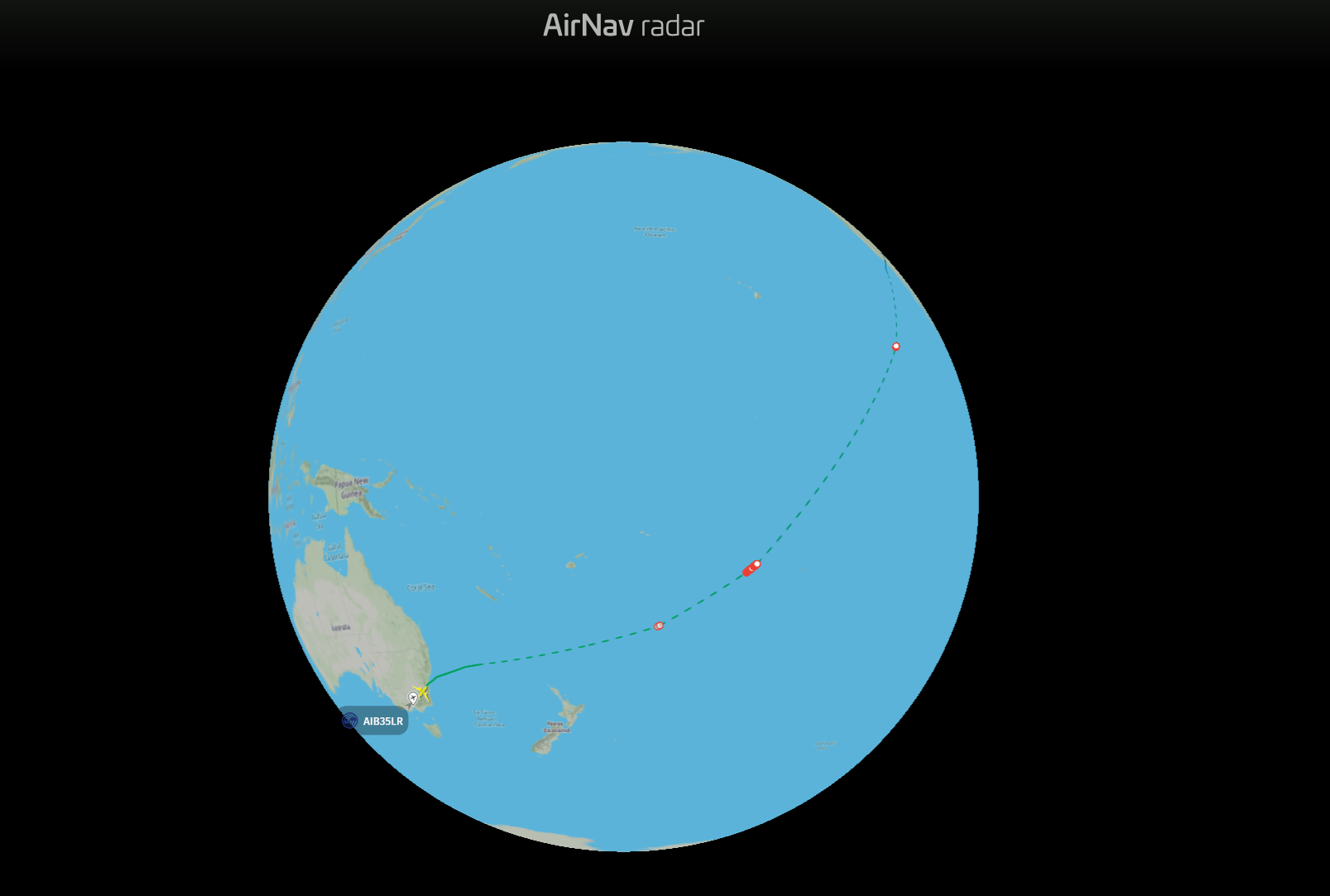
3D Globe Map
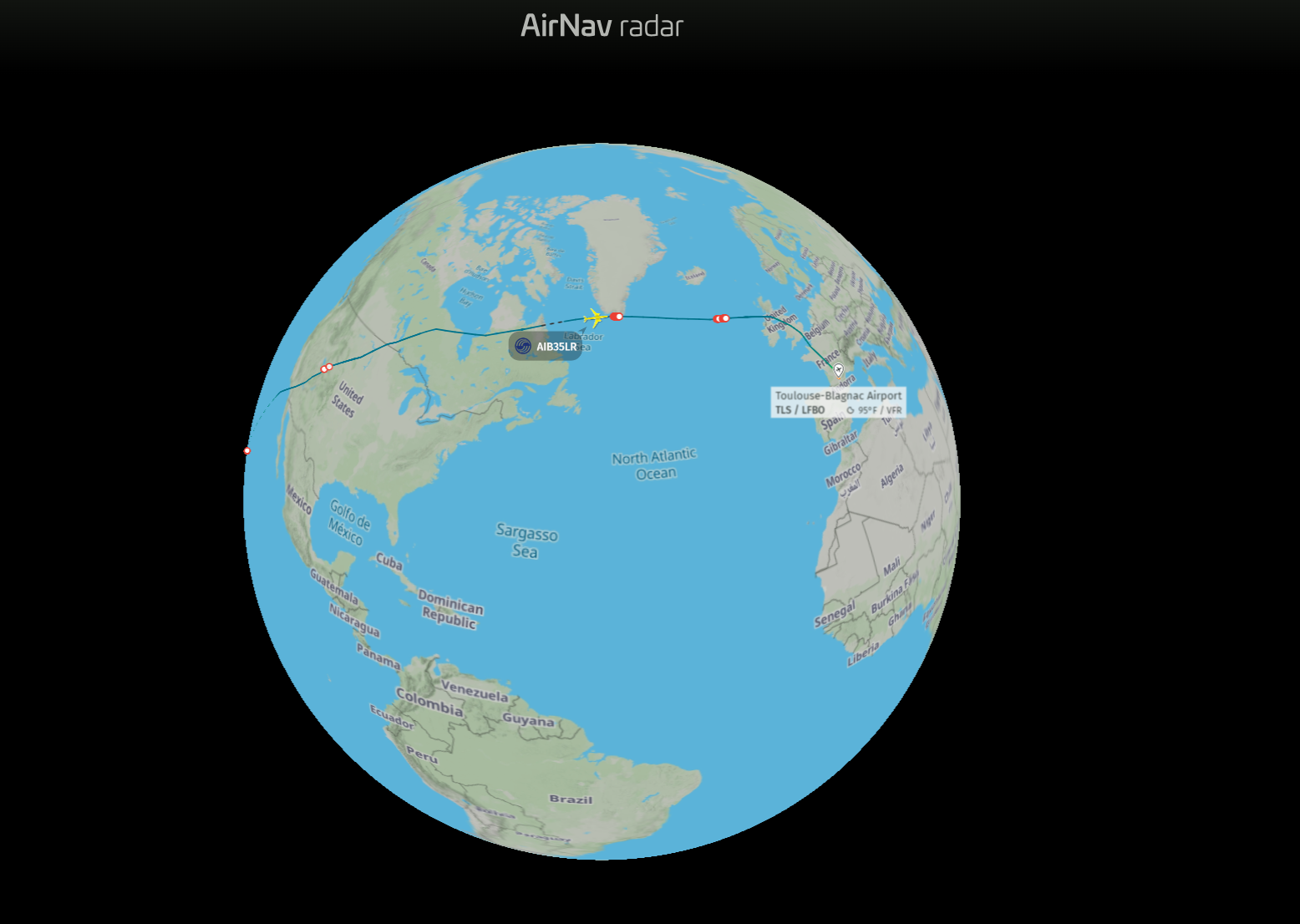
3D Globe Map
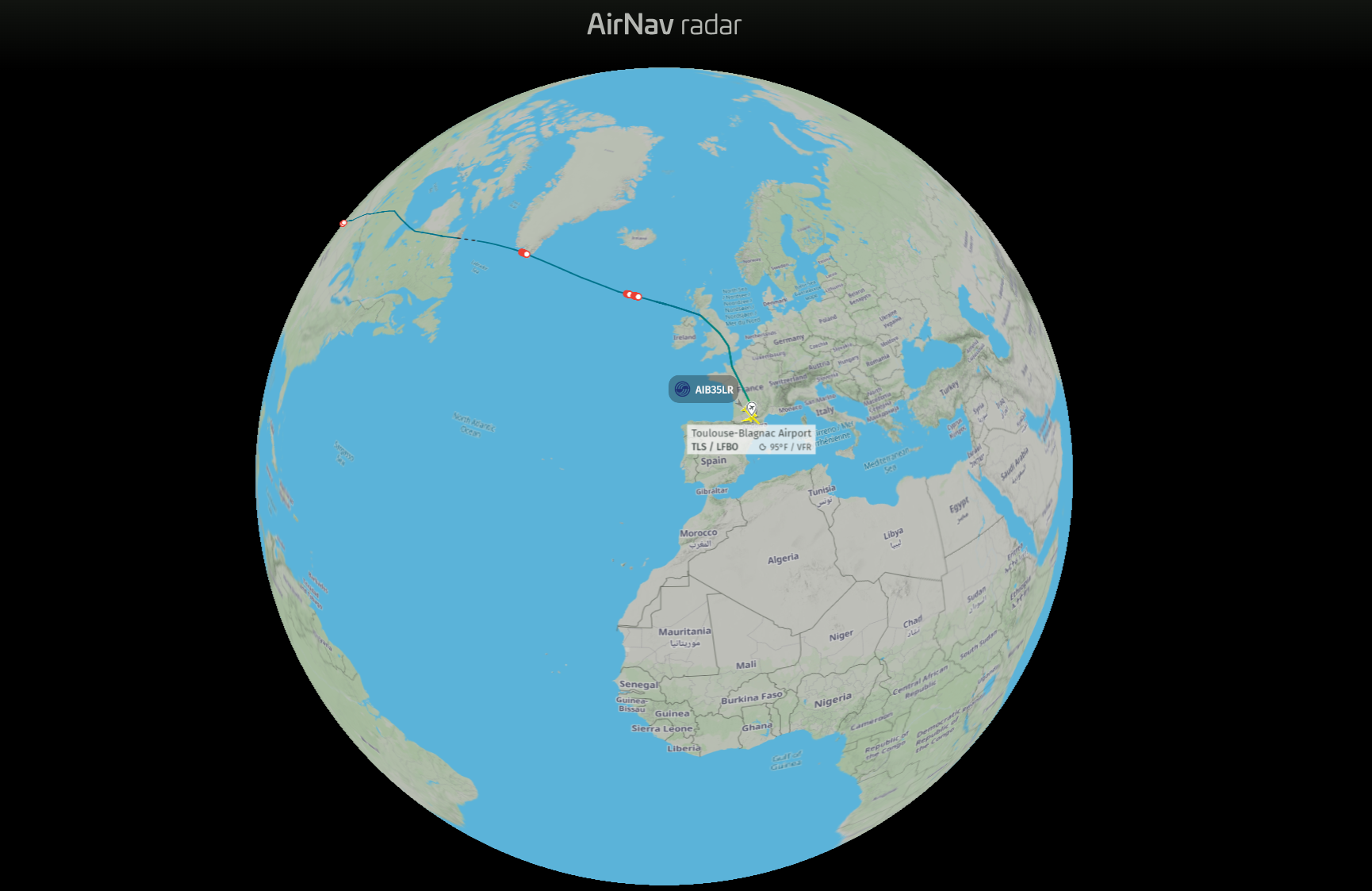
3D Globe Map
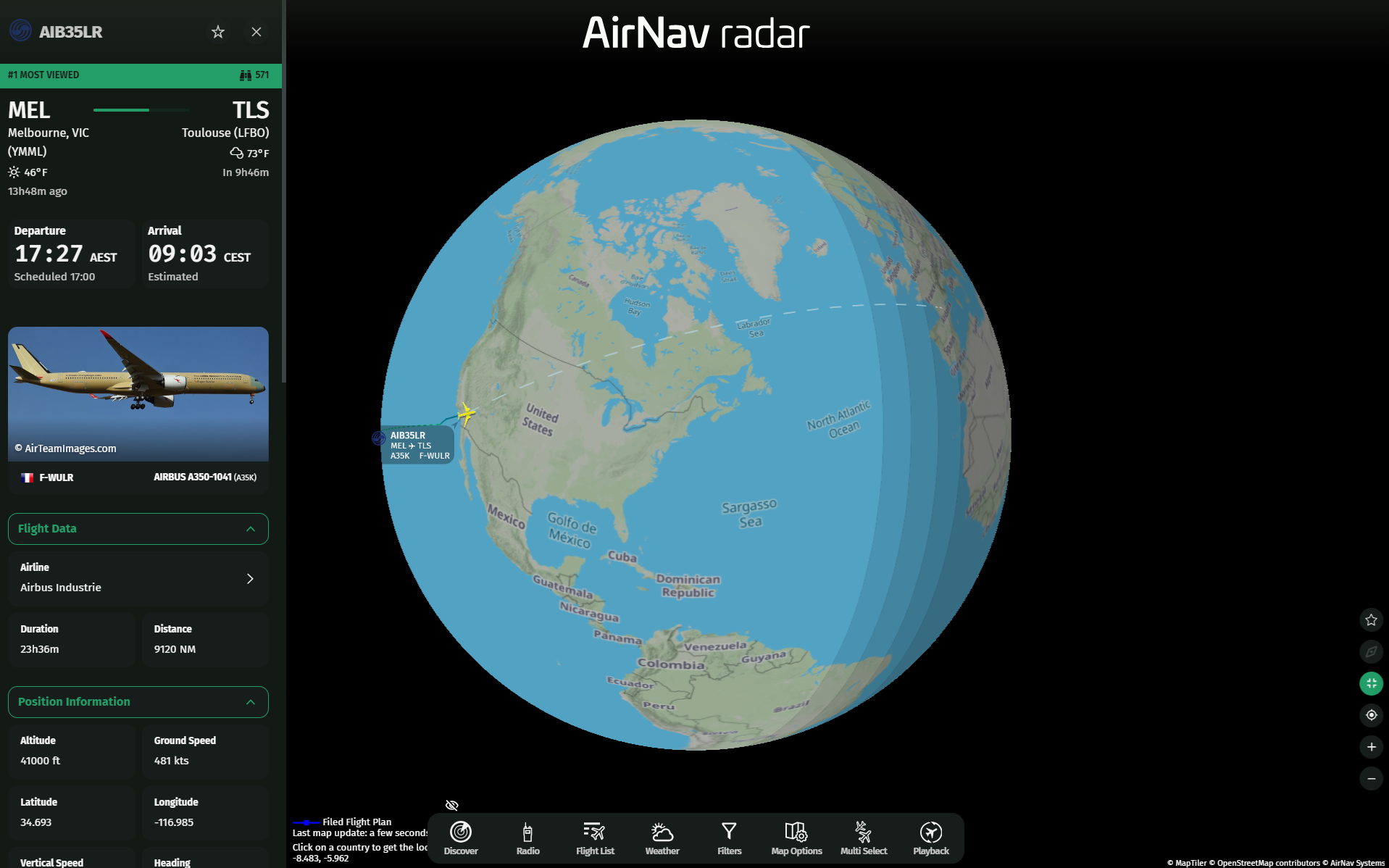
The aircraft, an Airbus A350-1000ULR carrying the test registration F-WULR (MSN 707), departed Melbourne Airport on Monday at 5:27 PM local time, beginning the second stage of its worldwide certification tour.
After completing a direct flight from Toulouse, France to Melbourne — a journey lasting around 19 hours — the aircraft began its return to Europe using a completely different route. Instead of flying back through Asia, the test team chose an ambitious eastbound track across the Pacific Ocean, continuing over North America before crossing the Atlantic and returning to European airspace.
Credit: Airbus
Riding the Jet Stream at More Than 660 Knots
The historic flight is expected to keep the A350-1000ULR airborne for almost 24 consecutive hours, placing it among the longest flights ever performed by a commercial-type aircraft.
The mission delivered a remarkable moment just a few hours after departure. While cruising over the South Pacific, flight tracking data from Flightradar24 showed the aircraft reaching a ground speed of approximately 662 knots (1,226 km/h or 762 mph). This figure is numerically above the speed of sound at sea level.
However, the aircraft itself was not flying supersonically. The A350 remained safely within its normal subsonic operating limits, with the impressive speed caused by an extremely strong high-altitude jet stream pushing the aircraft forward. These powerful tailwinds increased the aircraft’s speed relative to the ground, allowing it to cover enormous distances across the Pacific more efficiently.
The Technology Behind Qantas’ Project Sunrise Aircraft
The Airbus A350-1000ULR has been specially developed to overcome one of aviation’s greatest challenges: connecting Australia’s major cities directly with distant international destinations.
Qantas’ Project Sunrise aims to operate nonstop flights from Australia’s east coast to cities including London and New York, eliminating the need for traditional stopovers and overcoming what the airline calls the “tyranny of distance.”
To achieve a range of more than 18,500 kilometers (nearly 10,000 nautical miles), Airbus engineers equipped the aircraft with several major modifications:
- Additional 20,000-liter Rear Center Tank (RCT): Expands fuel capacity to support flights lasting almost an entire day.
- Optimized galley cooling systems: Lightweight localized systems replace heavier centralized equipment, reducing aircraft weight.
- Advanced flight-test instrumentation: More than 1,000 sensors monitor everything from cabin conditions and fuel usage to aircraft performance during extreme-duration flights.
For this global proving mission, the aircraft is being operated by a combined team of Airbus test pilots and Qantas flight crews, collecting critical data ahead of the planned commercial launch of Project Sunrise operations in 2027.
Arrival Expected Back in Toulouse
The aircraft is currently continuing its transpacific and transatlantic route, with aviation enthusiasts and flight trackers around the world following the historic journey.
If the schedule remains unchanged, F-WULR is expected to land at Toulouse-Blagnac Airport on Tuesday morning at approximately 09:00 local time, completing a remarkable round-the-world proving flight in just two ultra-long-haul sectors.
This mission represents another major milestone in the evolution of long-distance aviation, demonstrating how new aircraft technologies are bringing the possibility of nonstop global travel closer than ever before.
Track historic flights like this one live with AirNav Radar and follow the world’s aviation activity in real time.